
PROCEDURE BASICS · 5-MIN READ · UPDATED MAY 2026
Gastric Sleeve Surgery Explained: Quick & Simple
what VSG surgery involves, how it works, what changes in your body, and what to expect — in plain English, no medical jargon.
By Dr. Alejandro López, MD · Bariatric Surgeon · Tijuana · Guadalajara · Puerto Vallarta
The Short Version
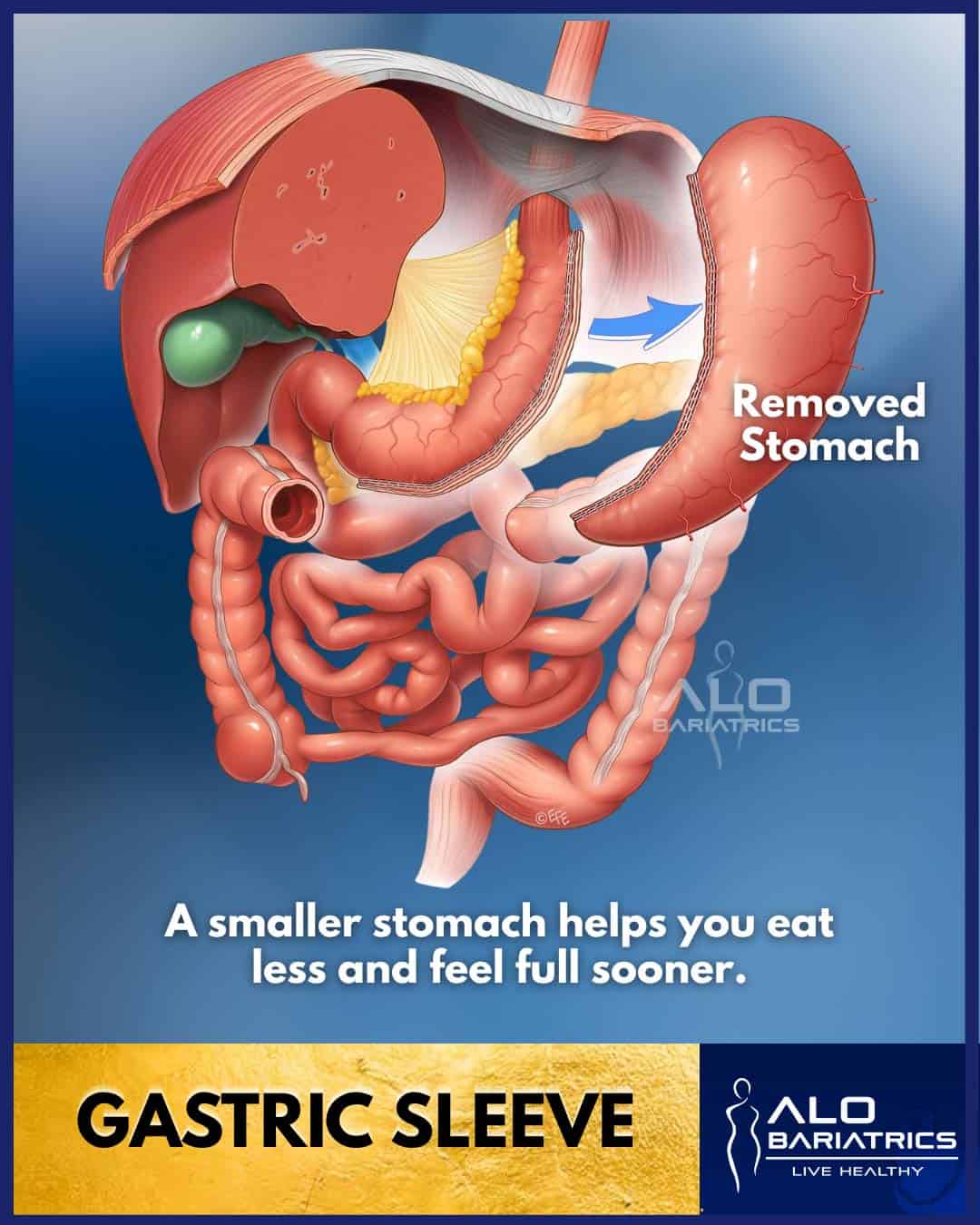
- Gastric sleeve removes 75–80% of your stomach permanently.
- New stomach holds 2–4 oz (about the size of a small banana).
- Average weight loss: 25–30% of body weight within 12–18 months.
- Cuts hunger hormone (ghrelin) by 60%+ — appetite drops dramatically.
- Surgery takes 60–90 minutes laparoscopically. You’re home in 7–10 days.
If you’re researching bariatric surgery and the medical websites all sound the same, this is the article you’ve been looking for. No diagrams full of jargon, no “digestive anastomosis” word salad. Just a plain explanation of what gastric sleeve surgery is, what it does to your body, and what your life looks like afterward.
In 5 minutes you’ll understand the sleeve better than 90% of patients who walk into a consult.
How the Sleeve Actually Works
Imagine your stomach is a balloon the size of a small football. The surgeon removes 75–80% of it, leaving a long, narrow tube about the shape and size of a banana. That’s the “sleeve.” The procedure is done laparoscopically — 5 small incisions in your abdomen, no large open cut, no visible scarring.
Two things change permanently. First, your stomach holds dramatically less food — about 2–4 ounces at a time. Second, the part of your stomach that produces ghrelin (the hunger hormone) is removed. Patients report that the constant cravings and physical hunger essentially disappear. See more on the gastric sleeve procedure.
6 Things the Sleeve Does to Your Body
Fact 1 of 6
Permanently smaller stomach
75–80% of your stomach is removed and discarded. The remaining 20–25% forms a long, narrow sleeve. This is permanent — the tissue is gone, not just rerouted. Sleeve cannot be undone, only converted to bypass if needed.
Fact 2 of 6
Capacity drops to 2–4 ounces
Before surgery, your stomach can stretch to hold 32+ ounces. After surgery, it holds 2–4 oz. This grows slightly over time (up to ~8 oz at year 2), but never returns to pre-surgery size. Small portions become physically necessary, not just recommended.
Fact 3 of 6
Hunger hormone (ghrelin) drops by 60%+
The fundus of your stomach (the top portion that’s removed) is where ghrelin is produced. With most of that gland gone, ghrelin levels drop dramatically within weeks. Most patients describe it as “suddenly not thinking about food all the time.”
Fact 4 of 6
Faster fullness from less food
Smaller stomach + lower ghrelin = you feel full after 2–3 bites of dense food. This isn’t willpower — it’s anatomy. Eating past full causes nausea, so patients quickly learn to stop on time. Most natural eating habit reset bariatric medicine offers.
Fact 5 of 6
Calorie absorption stays normal
Unlike bypass, sleeve doesn’t reroute the small intestine. Your body absorbs nutrients normally. You don’t get “malabsorption” from sleeve. This is why protein quality matters — you absorb most of what you eat, so eat the right things.
Fact 6 of 6
Metabolic improvements happen fast
Within days post-op, blood sugar improves. Within weeks, blood pressure normalizes. Within 6 months, 60% of type 2 diabetics achieve remission. Within 12 months, sleep apnea resolves in 80% of cases. See long-term outcomes.
📌 What the Sleeve Does NOT Do
The sleeve doesn’t change taste, smell, or food preferences. You’ll still want pizza. The sleeve doesn’t prevent emotional eating. If you eat because of stress, surgery alone won’t fix that. The sleeve doesn’t prevent weight regain if you graze on high-calorie liquids all day. It’s a tool, not a cure. The patients who succeed long-term combine the surgery with permanent lifestyle changes — protein first eating, strength training, and consistent follow-up.
A Typical Day After Sleeve Surgery (Month 3+)
- Breakfast: 2 scrambled eggs + 1/2 cup cottage cheese (~22g protein). Takes 15–20 min to eat slowly.
- Mid-morning: Whey isolate shake (25g protein) while at work.
- Lunch: 3 oz baked chicken + 1/2 cup vegetables (~22g protein). Eat slowly. Stop when satisfied (4–5 bites).
- Afternoon: 1/2 cup Greek yogurt + berries (10g protein).
- Dinner: 3 oz salmon + sm. side salad + steamed broccoli (~25g protein).
- Evening: 8 oz water + multivitamin.
Total: ~100g protein, ~1,000 calories, fully nutritious. See our top 10 protein foods.
Considering gastric sleeve?
Book a free 15-minute consult and we’ll review your BMI, comorbidities, and goals. No pressure, just clear answers about whether the sleeve is your best fit.
Frequently Asked Questions
How long does gastric sleeve surgery take?
60–90 minutes in the operating room. You’re monitored in recovery for a couple of hours. Hospital stay: 1–2 nights. Total time at the hospital from check-in to discharge: about 24–36 hours.
Is gastric sleeve reversible?
No. The 75–80% of stomach that’s removed is gone permanently. The sleeve can be converted to a gastric bypass if needed later, but it cannot be reversed back to your original anatomy.
How much weight will I lose?
Most patients lose 25–30% of their total body weight within 12–18 months. For a 250-lb patient, that’s about 65–75 lbs. Results vary based on starting weight, diet adherence, and exercise.
Can my stomach stretch back to normal size?
No. The remaining sleeve can dilate slightly over time (up to about 8 oz capacity at year 2), but never returns to pre-surgery size. Patients who chronically overeat for years may stretch the sleeve more — but it’s anatomically prevented from full reversal.
Will I have scars?
Minimal. Sleeve is done laparoscopically with 5 small incisions, each less than 1 inch. Most patients have barely visible scars within 12 months. See our companion: does bariatric surgery leave scars.
How fast can I return to work?
Sedentary work (desk/computer): 5–7 days. Light physical work: 2 weeks. Heavy lifting or labor: 4–6 weeks. Most patients fly home day 7 and resume normal life by week 2.
Is gastric sleeve safe?
Yes — very. 30-day mortality is 0.1% (lower than gallbladder removal). Complication rate is 1–3% for serious issues. At experienced centers with high volume (like ALO at 20,000+ procedures), rates are even lower. See bariatric surgery risks.
One last thing
Gastric sleeve is the most-performed bariatric procedure in the world for a reason: it’s simple, effective, and durable. For most candidates, it’s the right first choice. For some (severe diabetes, GERD, BMI >50), bypass or SADI-S may be better.
Compare procedures: sleeve vs bypass, eligibility, and all-inclusive pricing.
Medically reviewed by Dr. Alejandro López Ortega, MD, FACS
Bariatric surgeon board-certified by the Consejo Mexicano de Cirugía General, Fellow of the American College of Surgeons and founder of ALO Bariatrics (2011), with more than 20,000 bariatric surgeries. ALO Bariatrics operates in Tijuana, Guadalajara and Puerto Vallarta, Mexico; all-inclusive packages start at $4,500 USD. Updated: 2026-06-22.