
BMI Calculator — Find Out If Bariatric Surgery May Be Right for You
Calculate your Body Mass Index in seconds. Understand what your BMI means, the health risks tied to each category, and whether you may be a candidate for bariatric surgery at ALO Bariatrics.
Calculate Your BMI
Enter your height and weight below. Your BMI will be calculated instantly, with an interpretation of what it means and whether you may qualify for bariatric surgery.
What Is BMI and Why Does It Matter?
Body Mass Index is the most widely used clinical screening tool to estimate body fat and identify weight-related health risks. It's not perfect — but it's the starting point for every bariatric evaluation.
The simple math
BMI is calculated by dividing your weight in kilograms by your height in meters squared (kg/m²). For pounds and inches, the formula is 703 × weight(lbs) / height(in)².
The result places you in one of six recognized categories: underweight, normal, overweight, and three classes of obesity. Each category correlates with different levels of health risk.
For bariatric surgery candidacy, BMI is the primary numerical gate — but it's evaluated together with comorbidities (diabetes, hypertension, sleep apnea), age, weight-loss history, and overall health.
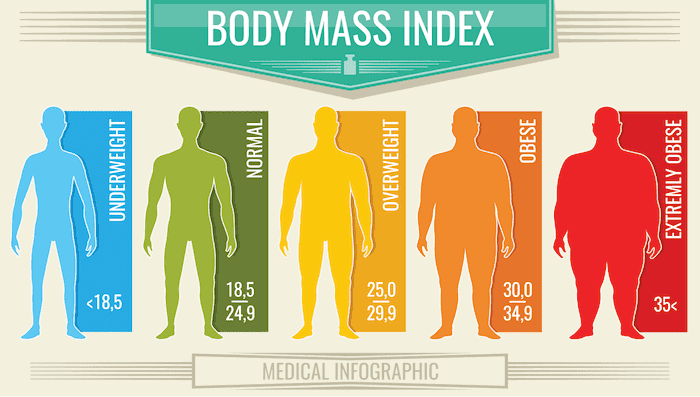
Your BMI and Bariatric Surgery
At ALO Bariatrics, our practice criteria accept patients with BMI above 30, evaluated individually based on overall health, comorbidities, and goals — more inclusive than older standard guidelines.
ALO Bariatrics candidate criteria
BMI ≥ 30 evaluated case-by-case based on metabolic disease, comorbidities, and personal goals. This is more inclusive than older guidelines that required BMI 40+, or BMI 35+ with comorbidities. Modern ASMBS 2022 guidelines support bariatric surgery starting at BMI 30 for patients with metabolic disease — aligning with our patient-centered approach.
BMI is the first gate, but it is never the only factor. A complete bariatric evaluation also considers:
- Comorbidities — type 2 diabetes, hypertension, sleep apnea, fatty liver disease, GERD, joint disease, infertility related to obesity
- Weight-loss history — documented attempts with diet, exercise, medications
- Age and overall health — typically 18–65, with individual evaluation outside that range
- Psychological readiness — commitment to lifelong nutritional and follow-up changes
- Absence of contraindications — active substance abuse, untreated mental illness, pregnancy
If your BMI is 30 or higher, schedule a free no-obligation consultation — we'll evaluate your specific situation and recommend the right path, whether that's surgery, a medical weight-loss program, or a referral elsewhere.
Health Risks That Climb With BMI
As BMI rises into the obese range, the risk of these conditions increases significantly. Bariatric surgery is proven to improve or resolve many of them.
Type 2 Diabetes
BMI ≥ 30 dramatically increases insulin resistance. Bariatric surgery often leads to diabetes remission or improvement.
Hypertension
High BMI is closely linked to elevated blood pressure. Many patients reduce or eliminate antihypertensive medications post-op.
Sleep Apnea
Obstructive sleep apnea correlates strongly with BMI. Weight loss often resolves moderate-to-severe OSA.
Heart Disease & Stroke
Cardiovascular risk rises sharply with BMI 30+. Sustained weight loss measurably reduces this risk over time.
Joint & Mobility Issues
Knees and hips bear added stress from excess weight. Weight loss often allows patients to delay or avoid joint surgery.
Fertility & Hormonal Health
PCOS, infertility, and pregnancy complications are linked to higher BMI. Many patients see hormonal improvements post-op.
When BMI Isn't the Whole Picture
BMI is a screening tool, not a diagnosis. There are real situations where it doesn't reflect actual health risk.
- Muscular individuals (athletes, bodybuilders) may have high BMI but low body fat — not at health risk despite the number
- Older adults may have normal BMI but elevated body-fat percentage; BMI underestimates risk in this group
- Ethnicity matters — South Asian populations face higher cardiometabolic risk at lower BMI thresholds
- Body composition (muscle vs fat distribution, waist circumference) often matters more than BMI alone for predicting metabolic health
- Weight-related symptoms — if you have type 2 diabetes, hypertension, or sleep apnea with a BMI 28–30, you may still benefit from bariatric surgery
This is why a real evaluation by a bariatric specialist is the only reliable way to determine candidacy — not a calculator. Use this tool as your starting point, then bring your results to a consultation.
Common Questions About BMI
What's the difference between BMI and body fat percentage?
BMI is a simple calculation using only height and weight. Body fat percentage measures actual fat versus lean mass (muscle, bone, water) and is more accurate for individual health assessment. A muscular athlete may have BMI 28 (overweight) but only 12% body fat (very lean). Most bariatric clinical guidelines still use BMI because it's quick and reproducible — but body composition is often discussed in a thorough consultation.
Is BMI accurate for women?
BMI uses the same formula for men and women, although women naturally carry more body fat at the same BMI. The risk thresholds and categories apply equally. Special considerations include pregnancy (BMI shouldn't be used during pregnancy) and post-menopausal hormonal shifts that can affect fat distribution.
What BMI is required for bariatric surgery at ALO?
At ALO Bariatrics, our practice criteria accept patients with BMI above 30, evaluated individually. This is more inclusive than older guidelines (BMI 40+, or BMI 35+ with comorbidities). Modern ASMBS 2022 guidelines support bariatric surgery starting at BMI 30 for patients with metabolic disease. See the full FAQ for gastric sleeve candidacy.
How can I lower my BMI quickly?
Sustainable BMI reduction comes from consistent lifestyle changes — calorie-deficit nutrition, regular physical activity, and behavioral support. For patients with BMI 30+ who have struggled with sustained weight loss, bariatric surgery is a medically proven intervention that produces lasting results. Quick crash diets typically rebound and can worsen long-term BMI.
Can I have bariatric surgery with a BMI lower than 30?
Generally no — but some emerging research supports metabolic surgery for type 2 diabetes patients with BMI 27.5–30 (this is called "metabolic surgery for diabetes"). These cases are highly individualized. If your BMI is 27–30 and you have uncontrolled type 2 diabetes, ask your bariatric surgeon whether metabolic surgery is an appropriate option for you.
Does insurance use BMI to determine bariatric surgery coverage?
Yes. U.S. insurance plans typically require BMI ≥ 40, or BMI 35+ with documented comorbidities, plus 6–12 months of supervised weight loss attempts. ALO Bariatrics is self-pay (most U.S./Canadian insurance does not reimburse out-of-network surgery in Mexico), which means the rigid insurance BMI gates don't apply — we evaluate each patient individually based on medical appropriateness.
Ready for a Real Evaluation?
Your BMI is the starting point. A free consultation with our team gives you the complete picture — based on your specific medical history, BMI, and goals.
Continue Your Research
Am I a Candidate?
Full eligibility checklist beyond BMI alone.
Gastric Sleeve
Most common bariatric procedure — complete overview.
Gastric Bypass
For severe T2 diabetes or significant GERD.
How to Choose a Surgeon
9-point patient checklist for any clinic.
Risks & Safety
Honest transparency on industry-published rates.
Gastric Sleeve FAQs
40+ common questions answered by surgeons.
Gastric Sleeve Cost
Transparent pricing from $4,500 USD all-inclusive.
Dr. Alejandro López
Founding bariatric surgeon · 20+ years experience.
Talk to Our Team
Free consultation, no obligation.
Important Patient Information
The BMI calculator on this page is an educational tool. BMI is a screening measure that does not directly measure body fat or distinguish between fat and muscle mass. Your BMI result is not a medical diagnosis and does not by itself determine bariatric surgery candidacy.
A complete evaluation by a qualified bariatric surgeon considers your medical history, comorbidities, weight-loss history, age, and personal goals. Use this calculator as a starting point — bring your result and questions to a free consultation for a personalized assessment.