
Weight-Loss Medications vs Bariatric Surgery: An Honest Comparison
What This Article Will Tell You
- Weight-loss medications work — for the right patient. Most produce 10–15% body-weight loss while taken. They're a real tool, not a scam.
- The catch isn't the medications. It's what happens when you stop. Most patients regain the weight within 12 months of stopping treatment — and many can't afford to keep paying $1,000+/month indefinitely.
- Bariatric surgery produces 25–30% body-weight loss that lasts. One-time investment. Permanent anatomical change. Decade-long durability in published studies.
- The honest answer depends on your BMI and how long you can keep paying. This article walks through which patient profile each option fits — without selling you either one.
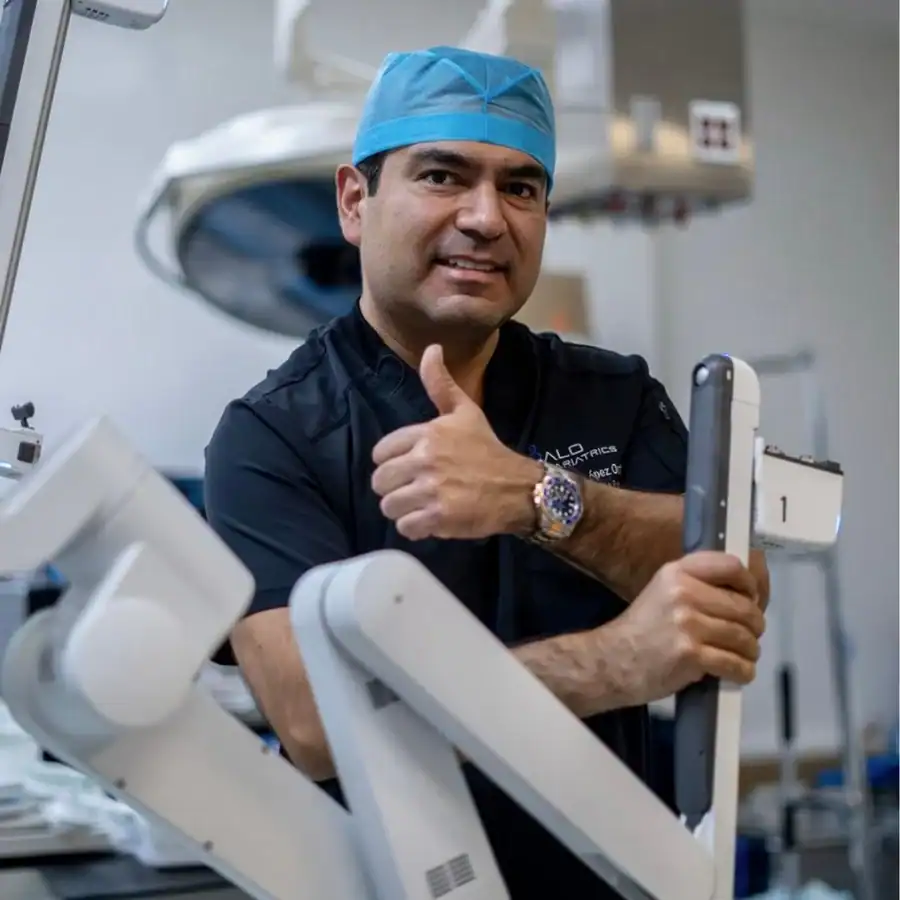
I've performed over 20,000 bariatric procedures across two decades. In the last few years, the conversations in my consultation room have changed. Patients arrive having already tried the new generation of weight-loss medications. Some are still on them. Some have stopped — and the weight has come back. All of them want the same answer to the same question:
“Doctor, did I just waste a year and twelve thousand dollars on something that was never going to last?” — A question I hear almost every week
The answer isn't simple. It depends on the patient, the BMI, the comorbidities, and what comes next. This article is what I'd tell you in my office — without the marketing language from either the surgical industry or the medication manufacturers.
The Patient I See Most Often
Maria is 47. She came to see me two months ago. She's been on weekly weight-loss injections for fourteen months. She lost 38 pounds in the first ten months — real, visible weight loss that changed how she felt. Then her insurance shifted and the out-of-pocket cost jumped to $1,200/month. She couldn't sustain it. She stopped four months ago.
She's already regained 22 of the 38 pounds. The hunger that disappeared while she was on treatment is back. Her BMI is 36. She has Type 2 diabetes, sleep apnea, and a knee that hurts every time she takes the stairs.
Maria's story isn't unusual. It's the most common consultation I have right now. And the question she came to me with is the question this article is trying to answer fairly: when is medication enough, when is surgery the right move, and when are they best used together?
Why Weight-Loss Medications Work (When They Do)
I want to start by giving credit where it's due. The current generation of weight-loss medications is the first pharmacological treatment for obesity that consistently produces meaningful weight loss in randomized trials. Decades of weight-loss drugs before this barely moved the scale. These ones do.
Three things make them work:
- They suppress appetite biochemically — patients describe a “quieter” relationship with food. The constant background hunger that drives most weight gain simply turns down.
- They slow gastric emptying — food stays in the stomach longer, which means smaller portions feel satisfying.
- They modulate insulin and blood-sugar signals — which is why they often improve diabetes alongside producing weight loss.
For a patient with mild obesity (BMI 27–34), no severe comorbidities, and the financial means to sustain ongoing treatment indefinitely, these are real, useful tools. I refer patients to medication-management physicians regularly. They are not a scam. They are not a placebo. They are not a fad.
The problem isn't whether they work. The problem is what happens next.
Why They Fail Long-Term — For Most Patients
The trials that show 10–15% weight loss are short. The longest published trials are 68–72 weeks. That's about a year and four months. The studies that follow patients after they stop show something the marketing rarely emphasizes:
The mechanism is straightforward: these medications work while you take them. They mimic a hormone that suppresses appetite and slows stomach emptying. The day you stop, both effects disappear. Your appetite returns to baseline. Your stomach empties at normal speed. The biology that drove the original weight gain is unchanged.
This isn't a flaw — it's how the medications were designed. They're intended for chronic, indefinite use, the way blood-pressure medication is. The question patients should be asked, but rarely are, is: can you, financially and practically, afford to take this medication every week for the rest of your life?
For most U.S. patients without long-term insurance coverage, the honest answer is no.
Why Bariatric Surgery Succeeds Where Medications Struggle
Bariatric surgery is fundamentally different. It doesn't simulate biological changes — it creates them. Three things happen during a gastric sleeve or gastric bypass that don't happen with any medication:
1. Permanent stomach-capacity reduction
Roughly 75–80% of the stomach is removed (sleeve) or bypassed (bypass). The capacity reduction is anatomical, not pharmacological. It doesn't reverse if you stop a medication, because there is no medication.
2. Permanent hormonal change
The portion of the stomach that's removed produces the majority of the body's hunger hormone (ghrelin). When that tissue is gone, hunger is dramatically reduced — for life. Patients consistently describe this as the single biggest difference between bariatric surgery and any other weight-loss method they've tried.
3. Metabolic improvements that often resolve diabetes
Bariatric surgery — particularly gastric bypass — frequently puts Type 2 diabetes into remission, often before significant weight loss has even occurred. The mechanism is being studied, but the clinical observation is clear and consistent across decades of data.
The result: long-term studies (the Swedish Obese Subjects study, NIH-funded follow-ups, and many others) show patients maintain 25–30% total body-weight loss at 10 years. The medications can't match those numbers — and the medications have to be taken every week to maintain even their smaller losses.
The hardest conversation I have with patients on long-term injectable treatment isn't about the side effects. It's about whether they can afford to keep paying for a medication that works only as long as they pay for it. — Dr. Alejandro López Ortega, ALO Bariatrics
Quick Decision Framework: Injections vs Surgery
The decision usually comes down to BMI, comorbidities, budget over time, and how permanent you want the result.
💉 Weight-Loss Injections — May be reasonable when…
- You have BMI 27–34 with no major comorbidities
- You can sustain $1,000+/month indefinitely
- You accept that weight regains when treatment stops
- You want to try non-surgical first, or are not surgery-ready
🏥 Bariatric Surgery — The clear choice when…
- You have BMI 35+ (or 30+ with diabetes, hypertension, sleep apnea, GERD)
- You want a durable, one-time solution rather than lifelong medication
- The 5-year total cost of medications exceeds a single surgery
- You seek diabetes remission — not just glycemic control
Which Option Fits Which Patient
The honest answer isn't “surgery wins” or “medications win.” It's “different tools for different patients.” Here's how I think about it in my consultation room:
The patient who fits weekly injections
Mild obesity, no major comorbidities, financial means to sustain indefinite treatment, comfortable with weekly self-injection.
- BMI 27–34 with no severe comorbidities
- Can sustain $800–$1,400/month indefinitely
- Tolerates GI side effects (nausea, slow gastric emptying)
- Not pursuing pregnancy in the next year
The patient who fits surgery
Moderate to severe obesity, comorbidities, prefers a one-time investment, wants permanent results.
- BMI 35+ (or 30+ with diabetes / sleep apnea / hypertension)
- Wants 25–30% loss that lasts decades
- Wants Type 2 diabetes resolution (not just management)
- Prefers one-time cost over indefinite monthly payments
For BMI 35+ with comorbidities, the data tilts heavily toward surgery. For BMI 27–34 without comorbidities, medications + lifestyle are a reasonable starting point. The middle (BMI 30–34 with comorbidities) is where the conversation gets more individual — and where I genuinely tell patients to consider both with their primary care physician.
Side-by-Side Comparison
The numbers without the marketing language. Independent figures based on published trials and current clinical pricing.
| Factor | 💉 Weekly Injections | 🏥 Bariatric Surgery |
|---|---|---|
| Total weight loss | 10–15% body weight | 25–30% body weight |
| Durability if treatment stops | ~2/3 regain within 12 months | Loss maintained at 5–10 years |
| Type 2 diabetes | Improves while on treatment | Often goes into remission |
| Cost (monthly) | $800–$1,400 indefinitely | One-time |
| Cost over 5 years | $48,000–$84,000 | $4,500 (gastric sleeve at ALO) |
| Side effects | Nausea, reflux, slow stomach emptying | Surgical recovery (1–2 weeks), permanent dietary changes |
| Best for BMI | 27–34 | 35+ (or 30+ with comorbidities) |
For a deeper version of this table — including pregnancy planning, side-effect profiles, and reversibility — see our complete bariatric surgery vs weight-loss injections comparison.
5-Year Cost & Impact Breakdown
| Factor | 💉 Weekly Injections | 🏥 Gastric Sleeve at ALO |
|---|---|---|
| Monthly cost | $1,000–$1,400/month indefinitely | $4,500 one-time |
| Total cost over 5 years | $60,000–$84,000 | ✓ $4,500 — paid once |
| Weight regain if stopped | ~2/3 returns within 1 year (SURMOUNT-4) | Permanent anatomical change |
| Diabetes outcome | Control while using medication | Remission possible |
| Side effects | Nausea, reflux, slow stomach emptying, possible muscle loss | Surgical recovery (1–2 weeks), permanent dietary changes |
| Reversible? | Yes — but weight returns | Permanent (sleeve is not reversible) |
When Medications and Surgery Work Together
One thing I want patients to understand: this is not an either/or decision in every case. Some of the best clinical outcomes I've seen come from patients who used both tools strategically.
Pre-surgical use
For very-high-BMI patients (50+), starting on medication for 3–6 months before surgery can reduce surgical risk by lowering BMI into a safer range. This is increasingly common and is generally well-tolerated.
Post-surgical use for plateau
Some patients hit a weight-loss plateau 12–18 months after surgery and aren't at their goal weight. For these patients, short-term medication can help break the plateau without needing revision surgery. I coordinate with primary-care physicians or endocrinologists for this.
What I generally don't recommend
Long-term medication use after bariatric surgery for patients who are stable at goal weight. The cost-benefit doesn't favor adding a daily medication on top of an already-effective surgical result. Most patients don't need it.
Want a personal recommendation?
Free 30-minute video consultation with our team. We'll review your BMI, comorbidities, and history — and give you an honest answer about whether surgery, medication, or a combination fits you best.
Already on GLP-1 Medications and Considering Surgery?
You are not alone. Many patients start on prescription weight-loss medications, see results plateau or become financially unsustainable, and start asking about a permanent solution. Here is what typically happens when patients transition:
1. Timing matters — but it is flexible
Most surgeons ask patients to stop GLP-1 medications 1–2 weeks before surgery to reduce anesthesia risk (delayed gastric emptying can cause aspiration). This is now standard guidance from the American Society of Anesthesiologists (2023). Your surgeon will give you a personalized taper plan.
2. The weight you kept off with medications typically stays off after surgery
Surgery locks in the loss through anatomical and hormonal changes. You do not need to worry that stopping the medication will undo everything, because the surgery replaces the mechanism that was helping you.
3. What the data shows about stopping medications
The SURMOUNT-4 trial (2024) found patients regained roughly two-thirds of the weight they had lost within one year of stopping tirzepatide. That is the core problem with a medication-only path: the moment you stop, the biology resets. Surgery does not have that off-switch — the anatomical and hormonal changes are permanent.
4. Some patients need both — long-term
For patients with very high BMI (50+) or severe metabolic disease, we sometimes recommend continuing a low-dose medication after surgery to reach and maintain their goal. This is decided case by case with the endocrinologist.
5. What surprises most patients
The hunger drop after surgery is often more profound and more predictable than what medications gave them. Many describe it as “the medication feeling — but permanent, and without the nausea.” That is the metabolic-hormone shift that a well-performed bariatric procedure creates.
What to Do If You're Stuck in the Cycle
If you're in Maria's situation — you tried medication, you couldn't sustain it, the weight is coming back — here's what I'd suggest as next steps, in order:
- Document where you are now. Current weight, current BMI, lab work (especially A1C if you have diabetes), and a list of every comorbidity. This is the baseline for any decision.
- Have an honest conversation about cost sustainability. If you can sustain $1,000+/month for the rest of your life, medication is a real option. If you can't, it isn't — at least not as a permanent strategy.
- Get evaluated for surgery — even if you're not sure. Most evaluations are free. There's no commitment. You'll learn what your candidacy looks like, and what the real costs and timelines are. Information isn't pressure.
- If surgery isn't right yet, restart medication strategically. Sometimes the right answer is medication for now and surgery later when life circumstances allow. That's a legitimate plan.
- Don't do nothing. The cycle of medication-on, medication-off, regain is hard on the body. If you can't sustain the medication and you don't want surgery, sometimes the best move is to stop the medication intentionally and work with a nutritionist on a sustainable lifestyle plan instead.
Frequently Asked Questions
Are weight-loss medications safe long-term?
Generally yes, for most patients, when prescribed and monitored by a physician. The most common side effects are gastrointestinal (nausea, reflux, slowed stomach emptying). Less common but documented: gallbladder problems, possible muscle/lean-mass loss with long-term use. The bigger long-term concern for most patients isn't safety — it's sustainability of cost and the regain pattern after stopping.
Can I have bariatric surgery if I'm currently on weight-loss medication?
Yes. Many patients come to ALO already on weekly injections. Most surgeons recommend stopping the medication 1–2 weeks before surgery to reduce gastric-emptying risks during anesthesia. We coordinate the transition with your prescribing physician. Contact our coordinator to plan the timing.
Why is bariatric surgery in Mexico so much cheaper than U.S. surgery or long-term medication?
Lower hospital costs, lower professional fees, smaller markup chain. Same surgical safety standards (ALO works with FACS / IFSO-accredited surgeons in fully-equipped private hospitals). Gastric sleeve at ALO starts at $4,500 USD all-inclusive — typically less than 6 months of out-of-pocket weekly injections in the U.S. See full pricing breakdown.
What if I can't afford either option?
Talk to your primary care physician about working with a registered dietitian and possibly a lifestyle-medicine program. These can produce 5–10% weight loss for many patients without medication or surgery. The results are smaller, but they're free or low-cost, and they're sometimes enough to improve comorbidities. ALO also offers financing plans for surgery — many patients are surprised at how affordable monthly payments can be.
How do I know if I'm a candidate for bariatric surgery?
The standard guideline is BMI 35+ on its own, or BMI 30+ with at least one major obesity-related comorbidity (Type 2 diabetes, sleep apnea, hypertension, severe joint disease). The only way to know for certain is a medical evaluation. Take our 2-minute candidacy quiz to see if you qualify.
Is regaining weight after stopping medication a personal failure?
No. It's the medication working as designed. These treatments are intended for indefinite chronic use — not a “course of treatment” with an endpoint. The weight returning when you stop is biology, not weakness. The honest question to ask your prescriber is whether indefinite use is sustainable for your life. If it isn't, that's information — not failure.
Do I have to stop taking GLP-1 medications before bariatric surgery?
Yes. The American Society of Anesthesiologists (2023) recommends stopping GLP-1 medications 1–2 weeks before surgery to reduce the risk of aspiration during anesthesia (these medications slow gastric emptying). Your surgeon and anesthesiologist will give you a personalized taper plan. This is a standard, well-managed step — not a reason to delay surgery.
Will I regain the weight if I stop the medications and don't have surgery?
The SURMOUNT-4 trial (2024) showed patients regained approximately two-thirds of the weight they had lost within one year of stopping tirzepatide. This is the fundamental problem with a medication-only path: the biology resets the moment you stop. Bariatric surgery does not have that off-switch — the anatomical and hormonal changes are permanent, which is why long-term maintenance rates are dramatically higher.
Can I take weight-loss medications after bariatric surgery?
Yes — and for some patients, it is the ideal path. If you started with a very high BMI (50+) or have severe metabolic disease, we sometimes recommend continuing a low-dose GLP-1 medication after surgery to reach and maintain your target weight. This is decided case by case with your endocrinologist. Most patients do not need medications after a well-performed sleeve or bypass, but the option exists for those who do.
📚 Continue Reading
More resources on the bariatric-vs-medication decision and what comes after.
Want an honest answer for your situation?
Free 30-minute video consultation. We'll review your BMI, comorbidities, and history — and tell you which option (or combination) fits you. No pressure, no obligation.
Medically reviewed by Dr. Alejandro López Ortega, MD, FACS
Bariatric surgeon board-certified by the Consejo Mexicano de Cirugía General, Fellow of the American College of Surgeons and founder of ALO Bariatrics (2011), with more than 20,000 bariatric surgeries. ALO Bariatrics operates in Tijuana, Guadalajara and Puerto Vallarta, Mexico; all-inclusive packages start at $4,500 USD. Updated: 2026-08-29.