
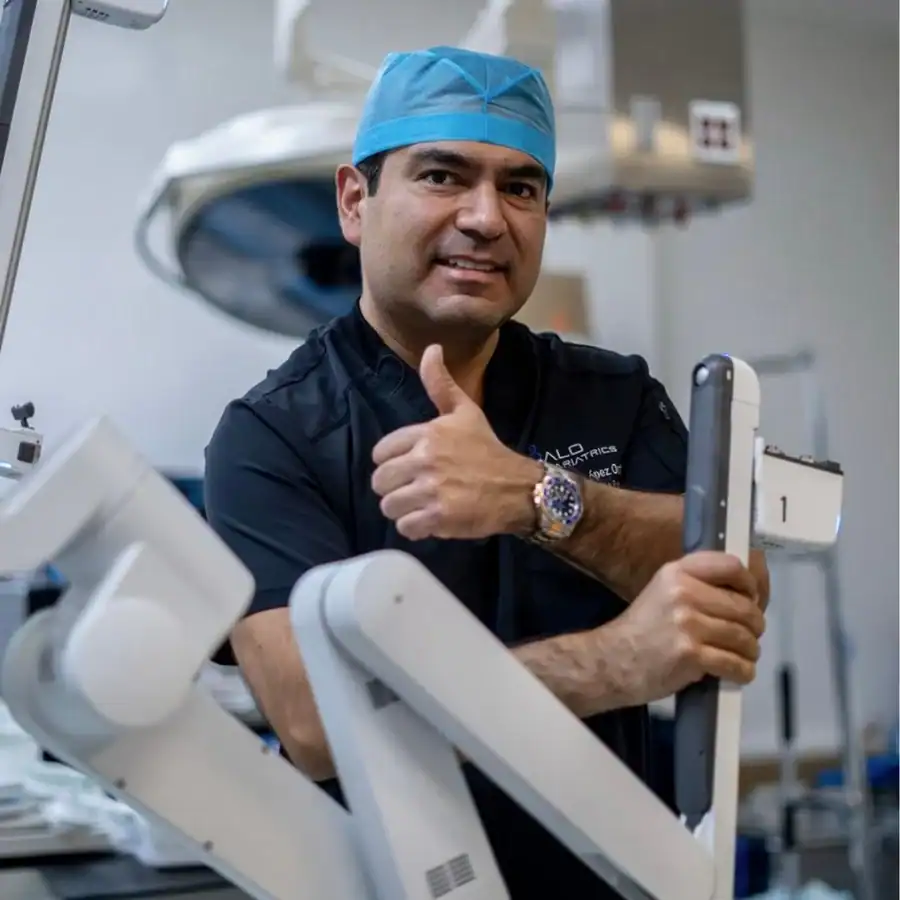
 type 2 diabetes — by Dr. Alejandro Lopez Ortega”>
Bariatric Surgery and Type 2 Diabetes: What Patients Should Understand
What This Article Will Tell You
- Type 2 diabetes is closely linked to obesity. About 90% of people with type 2 diabetes also live with overweight or obesity, and the connection between body weight and blood-sugar control is well established in the medical literature.
- Sustained weight loss may significantly improve metabolic health. Many patients who achieve substantial, durable weight loss see meaningful improvements in blood-sugar control — though results vary substantially by patient.
- Bariatric surgery is a tool, not a guarantee. It supports weight loss and metabolic change. It does not “cure” diabetes. Lifelong follow-up, diet, and continued medical care are essential.
- The decision is medical, not commercial. Any surgical decision should involve both your endocrinologist and a board-certified bariatric surgeon, and should never replace ongoing diabetes management.
Type 2 diabetes is one of the defining chronic conditions of the modern world. The numbers are sobering: more than 10% of the U.S. adult population has been diagnosed, and tens of millions more live with prediabetes — a condition with a high probability of progressing without intervention.
Patients living with both obesity and type 2 diabetes often ask the same question in my consultation room: If I lose the weight, will my blood sugar improve? The honest medical answer is nuanced, and worth understanding clearly before making any surgical decision.
Bariatric surgery is not a treatment for diabetes. It is a tool that supports significant, sustained weight loss — and for many patients, that weight loss leads to meaningful improvements in blood-sugar control. Patients who do best are the ones who understand that distinction from the start. — Dr. Alejandro López Ortega
Type 2 Diabetes Today: A Brief Context
Type 2 diabetes is a chronic metabolic condition in which the body either does not produce enough insulin or cannot use the insulin it produces effectively. Over time, elevated blood sugar damages blood vessels, kidneys, eyes, nerves, and heart tissue.
Diabetes is best understood as a long-term condition that requires ongoing management — including medical treatment, lifestyle modification, and routine monitoring. There is no single intervention, surgical or otherwise, that replaces that lifelong management.
The Link Between Obesity and Type 2 Diabetes
The medical relationship between excess body weight and type 2 diabetes is well established. The most well-documented mechanism is insulin resistance — when muscle, liver, and fat tissues stop responding effectively to the insulin the body produces.
Several mechanisms in the body change as weight increases:
- Insulin sensitivity declines as fat tissue, particularly visceral fat, releases inflammatory signals that interfere with insulin signaling.
- Pancreatic beta cells — the cells responsible for producing insulin — work harder over time and can lose function.
- Liver glucose regulation is disrupted in patients with fatty liver, which is common in obesity.
- Low-grade inflammation from excess adipose tissue compounds insulin resistance.
This is why obesity is widely recognized as one of the leading modifiable risk factors for type 2 diabetes — and why the question of weight management often becomes central to long-term diabetes care.
How Weight Loss May Improve Metabolic Health
Sustained weight loss — when achieved through any method — tends to improve metabolic markers in many patients. The mechanisms behind this are well documented:
📉 Improved Insulin Sensitivity
Weight loss, particularly reduction of visceral (abdominal) fat, often leads to improved tissue response to insulin. Many patients see their organs and muscles begin taking up glucose from the bloodstream more effectively. Results vary by patient.
🧬 Better Pancreatic Function
When excess weight is reduced, the pancreatic cells that release insulin can often regain efficiency in regulating blood-sugar spikes. This depends on how long diabetes has been present and the degree of beta-cell decline.
🔥 Reduced Inflammation
Excess adipose tissue contributes to chronic low-grade inflammation. Weight loss reduces inflammatory markers, which may further improve insulin sensitivity. Results vary by patient.
🩸 Liver Health
Many patients with type 2 diabetes also have non-alcoholic fatty liver. Weight loss often reduces fatty deposits in the liver, which improves the liver's ability to regulate blood-glucose levels normally.
None of these are guarantees. They are mechanisms — biological pathways through which weight loss may support metabolic improvement. The patients who do best maintain the weight loss long-term, follow their endocrinologist's ongoing care plan, and adopt durable lifestyle changes.
Considering surgical options for sustained weight loss?
Speak with both your endocrinologist and an ALO bariatric coordinator before any decision. Free 30-minute video consultation, no obligation.
Where Bariatric Surgery Fits — Honestly
Bariatric surgery is a tool that supports significant, sustained weight loss. It is not a treatment for type 2 diabetes, and patients should not pursue surgery primarily as a way to discontinue prescribed treatment.
What surgery does is well-documented:
- It reduces stomach capacity, leading to smaller portion sizes that are sustainable long-term.
- It changes hunger and satiety hormones — many patients report a quieter relationship with food.
- For procedures that bypass part of the small intestine (gastric bypass, mini bypass, SADI-S, duodenal switch), it also affects nutrient absorption and gut signaling.
For patients living with both severe obesity and type 2 diabetes, the body of medical literature suggests that the substantial weight loss achievable with bariatric surgery may significantly improve metabolic health — and many patients see meaningful improvements in blood-sugar control. Results vary substantially by patient, and depend heavily on factors including how long diabetes has been present, current pancreatic function, BMI, age, and post-operative adherence.
This is a clinical conversation — not a marketing one. Your endocrinologist, your primary care physician, and a board-certified bariatric surgeon should all be part of any decision to pursue surgery in the context of diabetes.
Procedures Most Often Associated With Metabolic Improvements
The major bariatric procedures all support significant weight loss, but they differ in how they work and in the metabolic literature surrounding them.
Gastric Bypass (Roux-en-Y)
Bypass creates a small stomach pouch and reroutes part of the small intestine. The combined restrictive + malabsorptive + hormonal mechanism is what gives bypass the strongest body of metabolic-improvement literature. Learn more about gastric bypass →
Gastric Sleeve (Sleeve Gastrectomy)
The most commonly performed bariatric procedure. About 75–80% of the stomach is removed, leaving a smaller sleeve-shaped pouch. Strong weight-loss results; growing literature on its metabolic effects, particularly when combined with sustained lifestyle change. Learn more about gastric sleeve →
Mini Gastric Bypass & Single-Anastomosis Procedures
Variations on bypass that simplify the surgical approach while preserving most of the metabolic-mechanism benefits. Learn more about mini bypass →
SADI-S & Duodenal Switch
For patients with severe obesity (typically BMI 50+), these more complex procedures combine sleeve gastrectomy with intestinal rerouting. Reserved for specific clinical profiles and require comprehensive lifelong follow-up. Learn more about duodenal switch →
Which procedure is appropriate depends on your medical history, BMI, the duration and severity of your diabetes, and other clinical factors. There is no "best for diabetes" procedure that fits every patient.
What "Improvement" Actually Means
This is the most important part of any honest conversation about diabetes and surgery — and the part most often misunderstood.
Improvement is not a cure. Type 2 diabetes is a chronic condition, and the term medical literature uses for sustained normalization of blood sugar without treatment is "remission" — not "cure." Even patients in remission require ongoing monitoring, because the condition can return, particularly if weight is regained.
For the right patient, with the right surgical procedure, with adequate follow-up and adherence, the medical literature shows that:
- Many patients experience meaningful improvements in HbA1c, fasting glucose, and other diabetes markers.
- Some patients achieve sustained normalization of blood sugar levels — what the medical literature describes as remission.
- Some patients see improvement initially but require ongoing or renewed treatment over time.
- Some patients see limited metabolic change — particularly those with longer-standing diabetes or significant beta-cell decline.
Honest patient counseling means presenting all four possibilities — not just the first two.
The Commitment That Makes Results Last
Patients with the best long-term outcomes share a few characteristics:
- They continue to work with their endocrinologist after surgery — adjustments to ongoing diabetes management are made carefully and gradually, never independently.
- They maintain bariatric-specific nutrition for life: protein priority, hydration, lifelong supplementation. (See our Bariatric Supplement Guide.)
- They get routine lab work including HbA1c, fasting glucose, and the standard post-bariatric blood-work panel on schedule.
- They build sustainable habits — daily movement, regular meals, sleep, stress management. The surgery does not replace these.
- They monitor for weight regain early and respond to it before patterns become entrenched.
The patients who skip endocrinologist follow-ups, abandon their nutrition plan, or treat surgery as a one-time fix tend to see weight return — and metabolic markers return with it.
Frequently Asked Questions
Does bariatric surgery cure type 2 diabetes?
No. Type 2 diabetes is a chronic condition. The medical term for sustained normalization of blood sugar is remission, not cure. Even patients in remission require ongoing monitoring with their physician. Bariatric surgery is a tool that supports significant weight loss, which may significantly improve metabolic health for many patients — but it is not a treatment for diabetes itself.
Should I consider surgery if my BMI is below 35?
Standard candidacy guidelines (ASMBS / IFSO) include BMI 35+, or BMI 30+ with significant obesity-related conditions including type 2 diabetes. If your BMI is below 30, surgery is generally not indicated, and other approaches with your endocrinologist would be appropriate first. Take our 2-minute candidacy quiz for a preliminary assessment.
Can I stop my diabetes treatment after surgery?
Never on your own. Any changes to your diabetes treatment must be made by your endocrinologist or prescribing physician based on lab work and clinical assessment. Some patients do see their treatment needs reduce significantly post-operatively, but that decision belongs to your treating physician — not to you, and not to your surgeon.
What happens if my blood sugar improves but then worsens later?
This can happen. The most common reason is weight regain or insufficient long-term lifestyle adherence. Routine lab work catches early changes, and your endocrinologist can adjust treatment accordingly. Some patients also experience progression of underlying beta-cell decline regardless of weight — this is part of the chronic nature of type 2 diabetes.
Is surgery safer or riskier than long-term diabetes treatment?
This is a comparison your endocrinologist and a bariatric surgeon should walk you through individually. Surgery has acute surgical risks; ongoing diabetes treatment has its own long-term risk profile. The right answer depends on your specific medical situation and is not the same for every patient.
How long do I wait between deciding and surgery?
Most patients can schedule surgery within 4–6 weeks of evaluation, after medical clearance and pre-operative protocols. For diabetes patients, your endocrinologist's clearance is part of the standard workup. Speak with a coordinator to begin the process.
What about other weight-loss approaches before considering surgery?
Most patients who eventually pursue surgery have already tried multiple approaches — supervised lifestyle programs, medical weight management, working with a registered dietitian. These remain first-line for many patients. Surgery is generally considered when those approaches have not produced sustained results and BMI/comorbidity criteria are met.
📚 Continue Learning
Educational resources on bariatric surgery, metabolic health, and what to expect.
Medical Disclaimer
This article is provided for educational and informational purposes only. It is not medical advice, diagnosis, or treatment. It does not establish a doctor-patient relationship. The information presented reflects general medical literature and the clinical experience of Dr. Alejandro López Ortega; it is not personalized guidance for any individual patient.
Bariatric surgery is not a treatment for type 2 diabetes. It is a surgical tool that supports sustained weight loss, which may have favorable effects on metabolic markers for many patients. Results vary substantially by patient and depend on factors including patient health, BMI, age, duration and severity of diabetes, pancreatic function, post-operative adherence, and ongoing medical care.
Do not modify, reduce, or discontinue any prescribed treatment based on information in this article. Treatment changes must always be made by your endocrinologist or prescribing physician based on individual clinical assessment and laboratory monitoring.
If you are considering bariatric surgery, schedule consultations with both a board-certified bariatric surgeon and your treating endocrinologist. Type 2 diabetes is a chronic condition that requires lifelong monitoring and care, regardless of surgical outcomes. ALO Bariatrics does not prescribe, sell, or dispense diabetes medications, and this article makes no claim of cure or specific clinical outcome.
If you experience symptoms of severe hyperglycemia or hypoglycemia (loss of consciousness, severe confusion, persistent vomiting, very high or very low blood sugar readings), seek emergency medical care immediately.
Want a personalized clinical assessment?
Free 30-minute video consultation. We coordinate with your endocrinologist and your primary care physician — no decision is made in isolation. No pressure, no obligation.
Medically reviewed by Dr. Alejandro López Ortega, MD, FACS
Bariatric surgeon board-certified by the Consejo Mexicano de Cirugía General, Fellow of the American College of Surgeons and founder of ALO Bariatrics (2011), with more than 20,000 bariatric surgeries. ALO Bariatrics operates in Tijuana, Guadalajara and Puerto Vallarta, Mexico; all-inclusive packages start at $4,500 USD. Updated: 2026-08-28.