By Dr. Alejandro López, Board-Certified Bariatric Surgeon
Updated August 29, 2026 · 8 min read · 20,000+ procedures performed
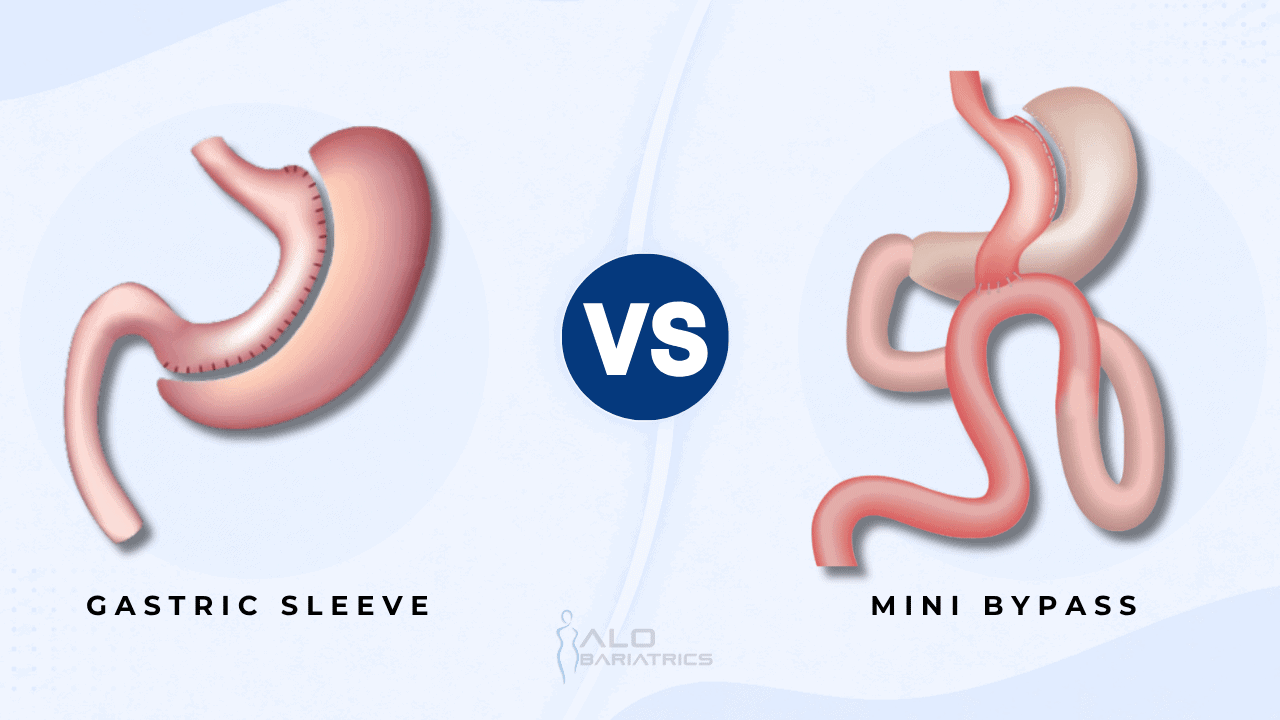
Mini gastric bypass vs gastric sleeve is a decision most patients face when their surgeon says "you have two solid options." Both are laparoscopic, both are performed regularly in Mexico, and both deliver strong long-term weight loss. But they work differently, carry different risks, and fit different patients. Here is the honest, surgeon-written comparison — no sales pitch.
Reviewed by Dr. Alejandro López, board-certified bariatric surgeon, 20,000+ procedures performed. Updated August 2026.
Quick Overview: The 60-Second Comparison
| Mini Bypass (OAGB) | Gastric Sleeve (VSG) | |
|---|---|---|
| Type | Restrictive + malabsorptive | Restrictive only |
| Long-term EWL | 65–75% | 55–65% |
| Diabetes remission | ~80% | ~60% |
| Reversible | Yes | No |
| Recovery | 3 weeks | 2–3 weeks |
| Main risk | Bile reflux, vit. deficiencies | Long-term GERD (5–20%) |
| Tijuana cost (from) | $5,900 | $4,500 |
How Each Procedure Works
What happens: The surgeon removes about 80% of the stomach vertically, leaving a narrow tube. No intestinal rerouting.
Why it works: Smaller stomach + the removed portion (fundus) produced most of the hunger hormone ghrelin, so appetite drops sharply within days.
What happens: Long narrow gastric pouch from top of stomach, connected directly to a loop of small intestine 150–200 cm downstream.
Why it works: Smaller meals plus reduced calorie and fat absorption. Single anastomosis makes it faster than classic RYGB.
Weight Loss: Head-to-Head Data
Across 5-year follow-up studies (Sharma et al. 2022, Rutledge 2020, ASMBS 2023 registry):
- Mini bypass: 65–75% excess weight loss (EWL) at 5 years. About 15–20% of patients regain some weight between years 3 and 7.
- Sleeve: 55–65% EWL at 5 years. Weight regain slightly more common (~25% of patients experience some regain by year 5).
In direct head-to-head trials (Musella 2019, YOMEGA follow-up), mini bypass delivered ~10 percentage points more excess weight loss than sleeve at 5 years. The gap is smaller for lower-BMI patients (30–40) and larger for higher-BMI patients (45+).
Want the Bigger Picture?
This is one of 7 major weight-loss procedures. Our full comparison covers all of them side-by-side — including long-term data, real Tijuana pricing, and a decision framework for choosing between them.
Pros and Cons of Each
✓ Pros
- Higher long-term weight loss (65–75%)
- Better type-2 diabetes remission (~80%)
- Technically reversible
- One anastomosis — simpler than RYGB
✗ Cons
- Lifelong daily vitamins (B12, iron, Ca, ADEK)
- Bile reflux risk 5–10%
- Slightly higher upfront cost
- Possible dumping after high-sugar meals
✓ Pros
- Simplest procedure (~1 hr surgery)
- No intestinal rerouting, no anastomosis
- Lowest complication rate of any bariatric
- Minimal ongoing vitamin protocol
- No dumping syndrome
✗ Cons
- Lower long-term weight loss than mini bypass
- Not reversible
- Can worsen or cause GERD (5–20% at 5y)
- Diabetes remission lower than bypass options
Not Sure Which Fits?
Get a Personalized Recommendation
Take the 3-minute qualifier. Dr. López’s team reviews your case within 24 hours and recommends the right procedure — no obligation.
Which Patient Fits Which Procedure
- BMI 35+ with type-2 diabetes or metabolic syndrome
- You want maximum weight loss with a reversible option
- You do not have severe GERD (bile reflux risk)
- You can commit to daily vitamins for life
- BMI 30–45, no significant reflux, no severe metabolic disease
- You want the simplest procedure with fastest recovery
- You prefer minimal ongoing supplementation
- You want the lowest complication rate
Recovery and Long-Term Follow-Up
Sleeve recovery: 1–2 nights in hospital, back to desk work in 10–14 days, full activity in 4 weeks. Liquid diet 2 weeks, pureed 2 weeks, soft foods week 5–6.
Mini bypass recovery: 2 nights in hospital, back to desk work in 14–21 days, full activity in 4–6 weeks. Same phased diet progression.
Long-term follow-up: Both procedures require initial follow-ups at 1, 3, 6, and 12 months, then annual labs. Mini bypass requires lifetime daily multivitamin + B12 (injection or sublingual) + iron + calcium + vitamin D. Sleeve requires a good multivitamin and periodic B12 check.
So Which Should You Choose?
If you want the honest short answer: sleeve is the safer default for most patients under BMI 45 with no diabetes and no reflux. Mini bypass wins for higher BMI, diabetes, or patients who explicitly want maximum weight loss and accept the tradeoff of lifelong vitamins and bile reflux risk.
The decision is not usually about which procedure is "better" — both are excellent. It is about which one better fits your biology, your risk tolerance, and your ability to commit to the follow-up protocol.
Frequently Asked Questions
Can I switch from sleeve to mini bypass later?
Yes. Sleeve-to-mini-bypass is a common revision path when a sleeve stops delivering results or causes reflux. Recovery is similar to a first-time bypass. Cost in Tijuana ranges from $6,500–$8,000 depending on complexity.
Which has lower complications: sleeve or mini bypass?
Sleeve has slightly lower overall complication rates (leak, bleed, infection) because there is no intestinal anastomosis. Mini bypass has a higher rate of nutritional deficiencies and a small risk of bile reflux. Both are considered very safe in experienced hands.
Is mini bypass the same as regular gastric bypass?
No. Regular gastric bypass (Roux-en-Y) uses two intestinal connections. Mini bypass uses one, making it simpler and reversible. Weight loss outcomes are similar; some studies show mini bypass slightly higher. Mini bypass has higher bile reflux risk; regular bypass has slightly higher complication rate.
How much does each cost in Tijuana?
Gastric sleeve: from $4,500 cash all-inclusive. Mini gastric bypass: from $5,900 cash all-inclusive. Final quote depends on your BMI, comorbidities, and hospital selection.
Will I have to take vitamins for life with mini bypass?
Yes. Daily multivitamin + B12 + iron + calcium + vitamin D is mandatory lifelong after mini bypass, because the intestinal bypass reduces absorption. Skipping vitamins leads to anemia, bone loss, and neurological problems within 1–3 years.
Which Fits You Best?
Take the 3-minute qualifier. Dr. López’s team reviews your case within 24 hours and recommends the right procedure — no obligation.
See If I Qualify →Medically reviewed by Dr. Alejandro López Ortega, MD, FACS
Bariatric surgeon board-certified by the Consejo Mexicano de Cirugía General, Fellow of the American College of Surgeons and founder of ALO Bariatrics (2011), with more than 20,000 bariatric surgeries. ALO Bariatrics operates in Tijuana, Guadalajara and Puerto Vallarta, Mexico; all-inclusive packages start at $4,500 USD. Updated: 2026-08-29.