
PROCEDURE EXPLAINED · 7-MIN READ · UPDATED JUNE 2026
Can Gastric Bypass Be Reversed? Honest Answer + When It's Done
Yes — gastric bypass is technically reversible. But the procedure is rarely needed, and most patients exploring “reversal” actually benefit more from a revision. Here’s when reversal makes sense, when it doesn’t, and what it costs.
By Dr. Alejandro López · Medically reviewed · Posted in Blog
TL;DR
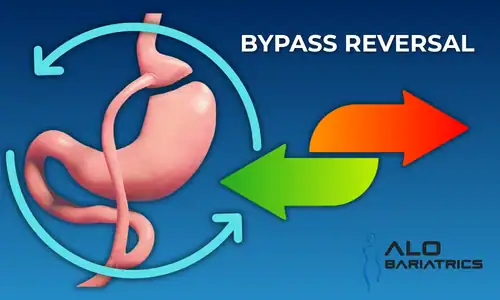
Gastric bypass can be reversed — the Roux limb can be taken down and the pouch reconnected to the remnant stomach. But reversal is rare and reserved for severe complications (uncontrollable dumping, chronic malnutrition, refractory hypoglycemia). For weight regain or reflux, a revision is typically the better option. Both procedures cost from $6,700 USD all-inclusive at our Tijuana location.
Concerned About Your Results After Bypass?
Weight regain, reflux, or discomfort after bariatric surgery can be corrected. Get your case reviewed by Dr. Alejandro López — board-certified revision specialist.
🔥 Get Reviewed by a Specialist →Reversal vs Revision — They're Different Procedures
Patients often use these terms interchangeably, but they’re not the same:
- Bypass reversal — undoing the bypass entirely. The Roux limb is disconnected and the gastric pouch is reconnected to the remnant stomach, restoring near-original anatomy. Performed only for specific complications.
- Bypass revision — modifying the existing bypass. Examples: resizing a dilated pouch, converting to distal bypass for weight regain, or fixing a marginal ulcer. The bypass anatomy is preserved.
Most patients searching “how to reverse my bypass” actually want a revision — they want help with weight regain, reflux, or other issues — not a return to pre-surgery anatomy. See our complete revision guide →
When Is Gastric Bypass Reversal Actually Done?
Reversal is reserved for specific complications that don’t respond to non-surgical treatment:
- Severe dumping syndrome. When dietary management, medications, and lifestyle changes can’t control episodes. Affects ~1% of bypass patients severely.
- Refractory reactive hypoglycemia. Recurrent post-meal low blood sugar that can’t be managed medically — can be dangerous if untreated.
- Chronic malnutrition or protein deficiency. When supplementation can’t maintain adequate nutrition despite compliance.
- Non-healing marginal ulcer. When the ulcer at the gastrojejunal anastomosis won’t heal despite PPIs, sucralfate, and smoking cessation.
- Severe weight loss beyond healthy range. Rare but documented — patients who lose too much weight and can’t regain it despite intensive nutrition support.
These represent fewer than 1-2% of all gastric bypass patients combined.
When Reversal Is NOT the Right Answer
If your reason for considering reversal falls into these categories, a bariatric revision is almost certainly the better path:
- Weight regain — A distal bypass conversion or SADI-S addresses regain without losing the metabolic benefits of bariatric surgery.
- New or persistent acid reflux — Reflux is uncommon after bypass; when it happens, targeted treatment (hiatal hernia repair, pouch resize) works better than reversal.
- “I want to eat normally again” — Reversal doesn’t guarantee normal eating tolerance and almost always results in significant weight regain.
- Cosmetic concerns about excess skin — These are addressed through plastic surgery, not bariatric reversal.
Honest perspective: most patients who reverse their bypass for non-medical reasons regret it within 2-3 years as they regain weight and lose the diabetes/blood pressure improvements they had achieved.
Patients Like You
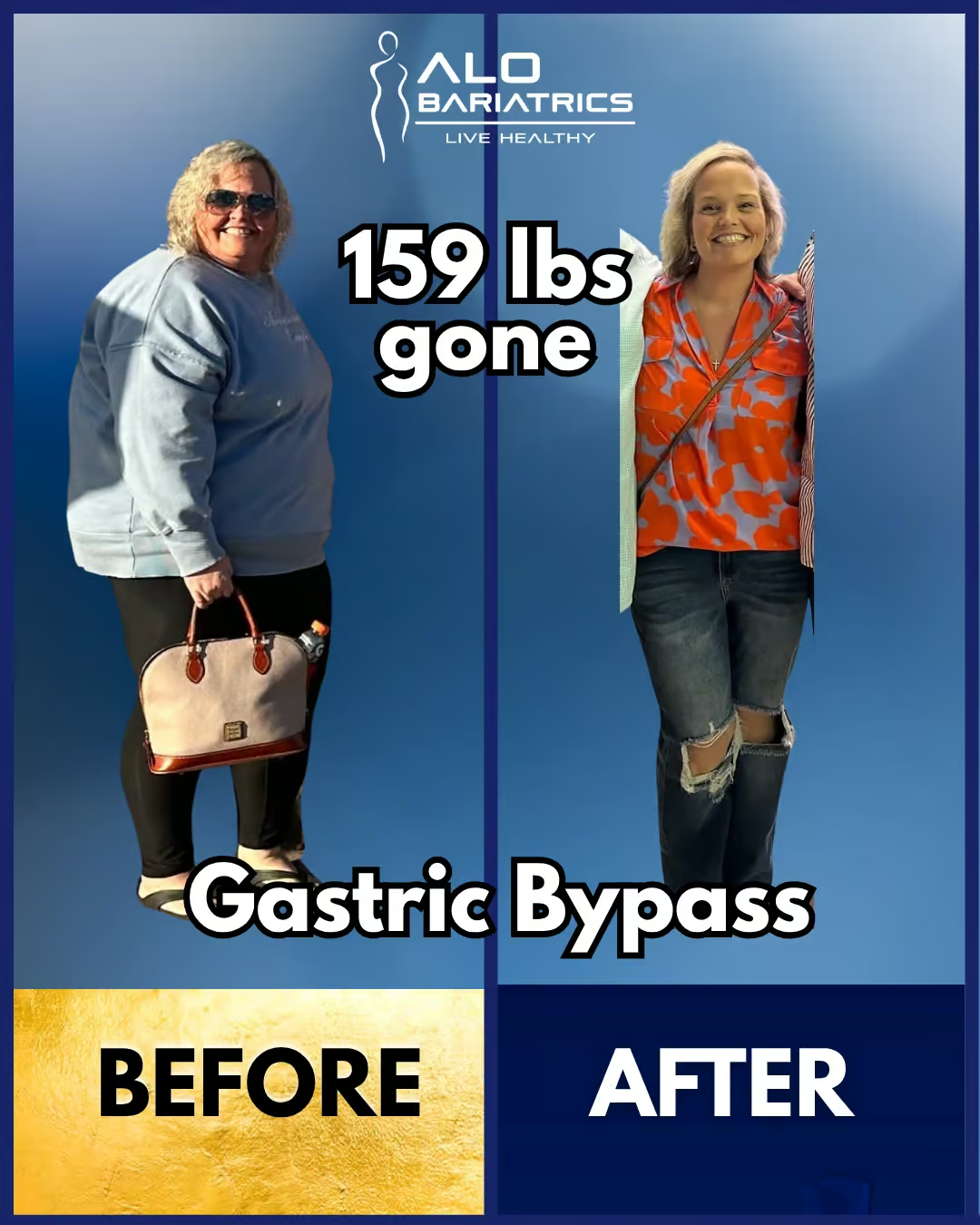
Bariatric patients treated by Dr. López in Guadalajara & Tijuana

The Surgical Approach
Bypass reversal is performed laparoscopically (minimally invasive) and typically takes 2-3 hours. The surgical steps:
- Take down the Roux-en-Y limb (disconnect the small intestine from the gastric pouch)
- Reconnect the small intestine in continuity (gastrojejunostomy is reversed)
- Reconnect the gastric pouch to the remnant stomach (gastrogastrostomy)
- Verify integrity with intraoperative endoscopy and leak test
Hospital stay: typically 2-3 nights. Return to normal activity: 2-3 weeks. Full recovery: 6-8 weeks.
Because the anatomy returns close to original, most patients can eat a normal diet again within 4-6 weeks. However, the stomach may have lost some elasticity, so some food restriction may persist.
What Does Bypass Reversal Cost in Mexico?
At ALO Bariatrics, the all-inclusive package for gastric bypass reversal follows the same pricing structure as our revision procedures: the cost is the standard bypass package price plus a flat $800 USD reversal/revision fee.
| Location | Price (USD) |
|---|---|
| Tijuana | from $6,700 |
| Puerto Vallarta | from $7,400 |
| Guadalajara | from $7,400 |
How the price is built: The fee is the Roux-en-Y bypass package price + $800 USD reversal/revision fee. The package includes surgeon, anesthesia, accredited hospital, pre-op labs, post-op care, and ground transportation. International flights are not included. US self-pay equivalent for bypass reversal runs $25,000-$40,000.
Most Patients Want Revision, Not Reversal
If you arrived here searching “can gastric bypass be reversed” because you’re struggling with weight regain, reflux, or quality-of-life issues — please pause before assuming reversal is the answer. In our 20+ years of revision experience, fewer than 2% of patients exploring “reversal” end up needing actual reversal. The other 98% are better served by:
- Gastric Bypass Revision — for weight regain, dilated pouch, marginal ulcers
- Bariatric Revision Hub — full overview of revision options
- Hiatal Hernia Repair — for reflux that’s actually caused by a hernia, not the bypass itself
Dr. Alejandro López conducts a thorough evaluation — including upper endoscopy and detailed history — before recommending reversal. The goal is the right procedure for your specific situation, not the most aggressive one.
Frequently Asked Questions
Is bypass reversal safe?
Will I gain back all the weight I lost?
Does US insurance cover bypass reversal in Mexico?
Can I reverse my bypass and have a different bariatric procedure later?
How long is recovery from bypass reversal?
Considering bypass reversal or revision?
Free evaluation with Dr. Alejandro López. We’ll review your symptoms, run the right diagnostics, and recommend the most appropriate procedure — reversal, revision, or non-surgical options.
Request Free Evaluation →Get a Free Revision Evaluation with Dr. López
Post-surgery complications are treatable. Board-certified specialist. 20+ years, 40,000+ combined procedures. No obligation.
Medically reviewed by Dr. Alejandro López Ortega, MD, FACS
Bariatric surgeon board-certified by the Consejo Mexicano de Cirugía General, Fellow of the American College of Surgeons and founder of ALO Bariatrics (2011), with more than 20,000 bariatric surgeries. ALO Bariatrics operates in Tijuana, Guadalajara and Puerto Vallarta, Mexico; all-inclusive packages start at $4,500 USD. Updated: 2026-06-25.