Alobariatrics

#1 Weight Loss Surgery Mexico
Logo
Home » Sleeve to Bypass Conversion for Reflux | ALO Bariatrics
Revision Procedure

Sleeve to Bypass Conversion for Reflux

Persistent acid reflux after a gastric sleeve is more common than most patients realize. Converting to a Roux-en-Y gastric bypass is the most reliable surgical solution — performed in a single laparoscopic operation by Dr. Alejandro López.

🔁 PART OF OUR BARIATRIC REVISION HUB

This is one of several bariatric revision procedures we perform. See our complete revision guide covering sleeve, bypass, fundoplication, weight regain scenarios, and how to choose the right path.

→ See the Full Bariatric Revision Guide

Why Persistent Reflux After Sleeve Requires Surgery

Up to 1 in 3 sleeve patients develop new or worsened acid reflux after surgery. Mild cases respond to proton pump inhibitors, weight loss, and diet changes. But when reflux persists despite medical therapy — or when endoscopy shows esophagitis or Barrett's esophagus — the underlying anatomical problem will not resolve on its own.

Converting a gastric sleeve to a Roux-en-Y gastric bypass eliminates the high-pressure tube anatomy of the sleeve and reroutes acid away from the esophagus. For most patients with severe post-sleeve GERD, this is the most effective long-term solution.
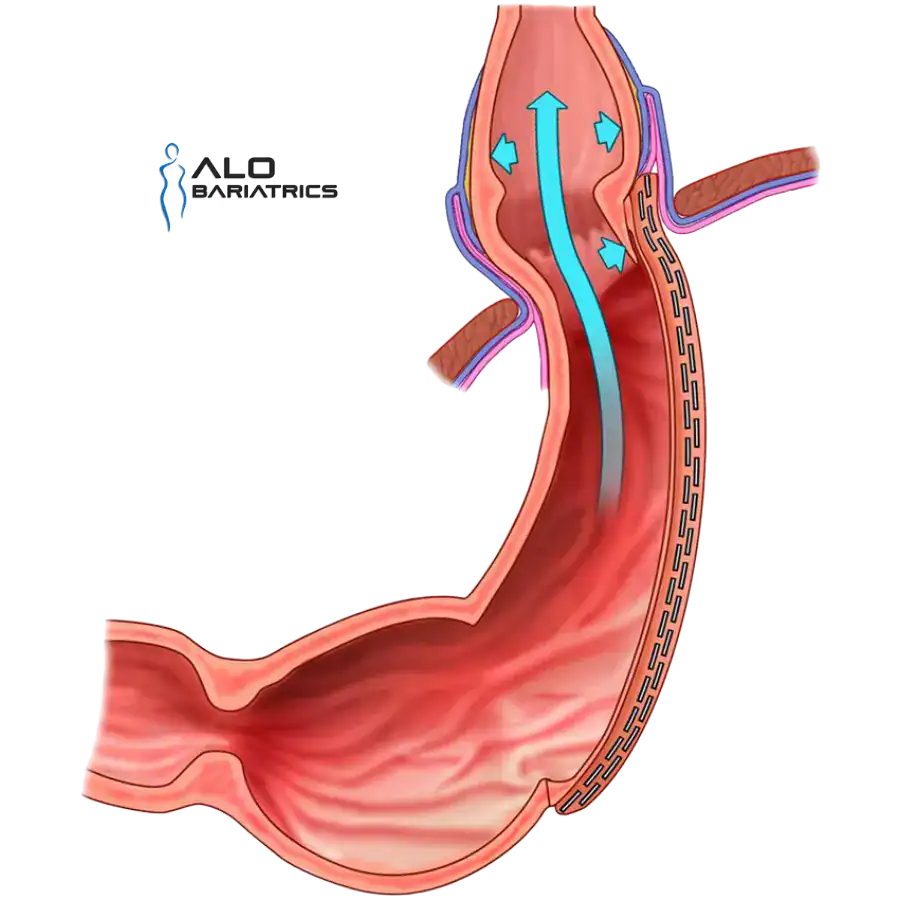
Gastric sleeve anatomy creating high pressure that pushes acid into the esophagus
The narrow sleeve tube creates high intragastric pressure that pushes acid upward toward the esophagus.

How the Bypass Anatomy Solves Reflux

  • Smaller acid-producing surface — The new gastric pouch produces minimal stomach acid.
  • Acid diversion — Digestive flow is rerouted through a Roux limb so acid no longer travels upward toward the esophagus.
  • Hiatal hernia repair — Any associated hiatal hernia is repaired in the same operation.
  • Sustained weight loss — Additional weight loss reduces intragastric pressure on the lower esophageal sphincter.

The result: GERD symptoms typically improve within days of surgery, and most patients can stop taking PPIs.

Who Is a Candidate for Sleeve-to-Bypass Conversion?

  • Persistent GERD symptoms despite maximum-dose PPIs for at least 6 months
  • Endoscopic evidence of esophagitis, ulceration, or Barrett's esophagus
  • Recurrent or untreated hiatal hernia
  • Weight regain combined with reflux relapse
  • Fit for laparoscopic surgery confirmed by preoperative evaluation

Medical consultation with Dr. Alejandro López for sleeve to bypass evaluation
Every candidate is evaluated personally by Dr. Alejandro López before revision is recommended.

Meet Your Surgeon — Dr. Alejandro López

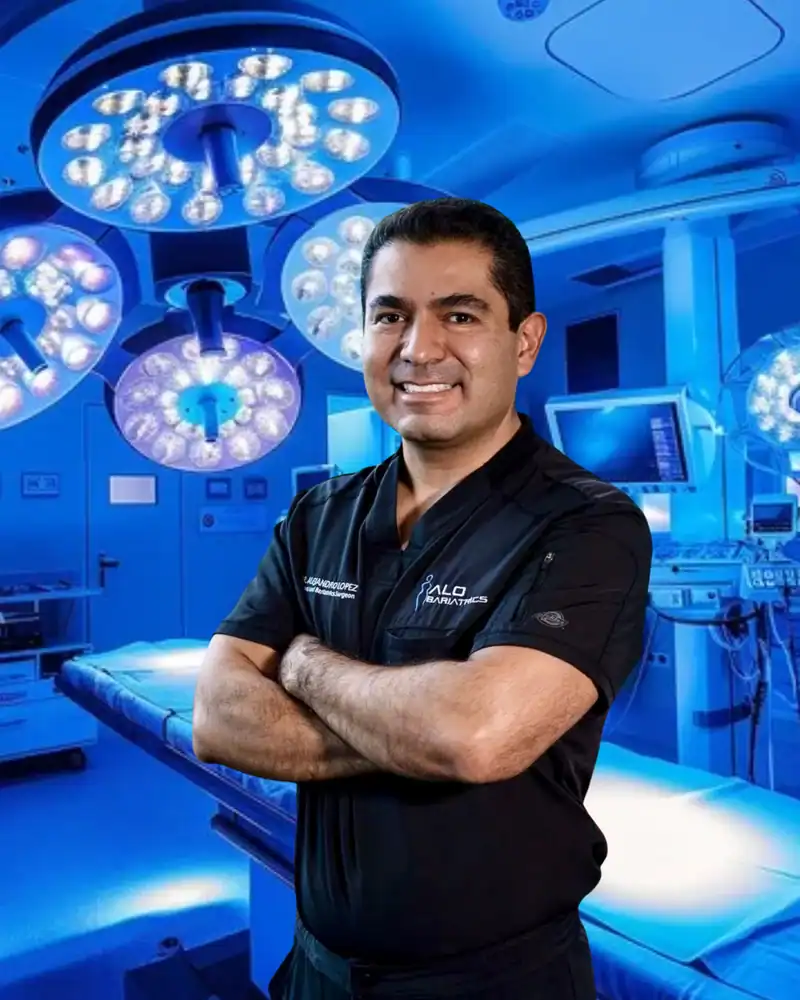
Dr. Alejandro López — Bariatric and Antireflux Specialist at ALO Bariatrics

Dr. Alejandro López, MD, FACS

Bariatric Revision Specialist
  • Fellow of the American College of Surgeons (FACS)
  • 20,000+ bariatric procedures performed
  • Specialized in sleeve-to-bypass conversion and antireflux surgery
  • Member of ASMBS, IFSO, and CMCOEM
  • Premium hospitals in Tijuana, Guadalajara, and Puerto Vallarta

Frequently Asked Questions

How do I know if my reflux is severe enough to need conversion?
Persistent reflux despite proton pump inhibitors (PPIs), nighttime regurgitation, erosive esophagitis on endoscopy, or Barrett's esophagus all suggest that surgical revision is appropriate. Dr. Alejandro López uses upper endoscopy, esophageal pH testing, and imaging to confirm.
Will I lose more weight after the conversion?
Yes, most patients lose additional weight after the conversion because the bypass anatomy alters absorption and hormonal signals beyond what the sleeve provided. The amount varies by starting weight, eating habits, and follow-up support.
What if I just had a hiatal hernia and not a true sleeve failure?
A focused hiatal hernia repair may resolve mild reflux without converting the sleeve. Dr. Alejandro López performs preoperative imaging and endoscopy to determine whether hernia repair alone is sufficient or if conversion to bypass is the better long-term solution.
How is the conversion performed?
The procedure is laparoscopic. Dr. Alejandro López trims the sleeve, creates a small gastric pouch, repairs any hiatal hernia, and constructs the Roux-en-Y bypass — all in a single operation lasting approximately 2-3 hours.
What is recovery like?
Hospital stay is typically 2 nights. Most patients return to light activities within 1 week and full activities within 2-3 weeks. Reflux symptoms often improve dramatically within the first week.
Is the sleeve-to-bypass conversion riskier than the original sleeve?
Revision surgery carries somewhat higher technical complexity than a primary procedure, but in experienced hands the safety profile is excellent. Dr. Alejandro López's team performs revision surgery as a routine part of their practice.

Find Out If You Are a Candidate

Send your prior sleeve operative report, current endoscopy, and a summary of your symptoms. Dr. Alejandro López personally reviews each conversion case at no cost.

Start My Evaluation

Confidential · No cost · Reviewed within 48 hours

Your Journey

What Happens Next?

  1. Submit your information
  2. Coordinator contacts you
  3. Receive personalized options
  4. Schedule your consultation
Why Patients Choose ALO
  • Certified Surgeons. 20+ years experience
  • 20,000+ procedures performed
  • ASMBS · IFSO · FACS members
  • Accredited hospitals with ICU