
SURGICAL TECHNIQUES · 7-MIN READ · UPDATED MAY 2026
Minimizing Bariatric Surgery Scarring: A Patient Guide to Modern Incisions
Most modern bariatric procedures leave scars smaller than a fingernail — and many fade to nearly invisible within 12 months. Here’s what to expect and how to optimize healing.
By Dr. Alejandro López, MD · Bariatric Surgeon · Tijuana · Guadalajara · Puerto Vallarta
The Short Version
- Modern bariatric surgery uses 4–5 small incisions (5–12 mm each) instead of one large cut.
- SILS leaves a single incision hidden in the belly button.
- Robotic-assisted surgery (Da Vinci) reduces tissue trauma further.
- Scars typically fade 60–80% in the first 12 months with proper care.
- Silicone sheets, sun protection, and avoiding tension speed healing.
See if you qualify in 2 minutes
Answer a few questions about your health and weight loss goals — our bariatric team reviews your answers and recommends the right procedure for you. No cost, no commitment.
Start my evaluation →Twenty years ago, bariatric surgery left a single scar running the full length of your abdomen. Today, the same procedures are performed through 4–5 keyhole incisions, or even through a single cut hidden in your belly button. The cosmetic outcome has improved as dramatically as the surgical outcome — but only if your surgeon uses modern techniques and you care for the incisions properly afterward.
This guide walks you through the techniques that minimize scarring, the timeline of how scars heal, what you can do to speed fading, and when a scar warrants medical attention. Most patients are surprised to learn how invisible their gastric sleeve, gastric bypass, or SILS procedure scars become.
Why Modern Bariatric Surgery Leaves Smaller Scars
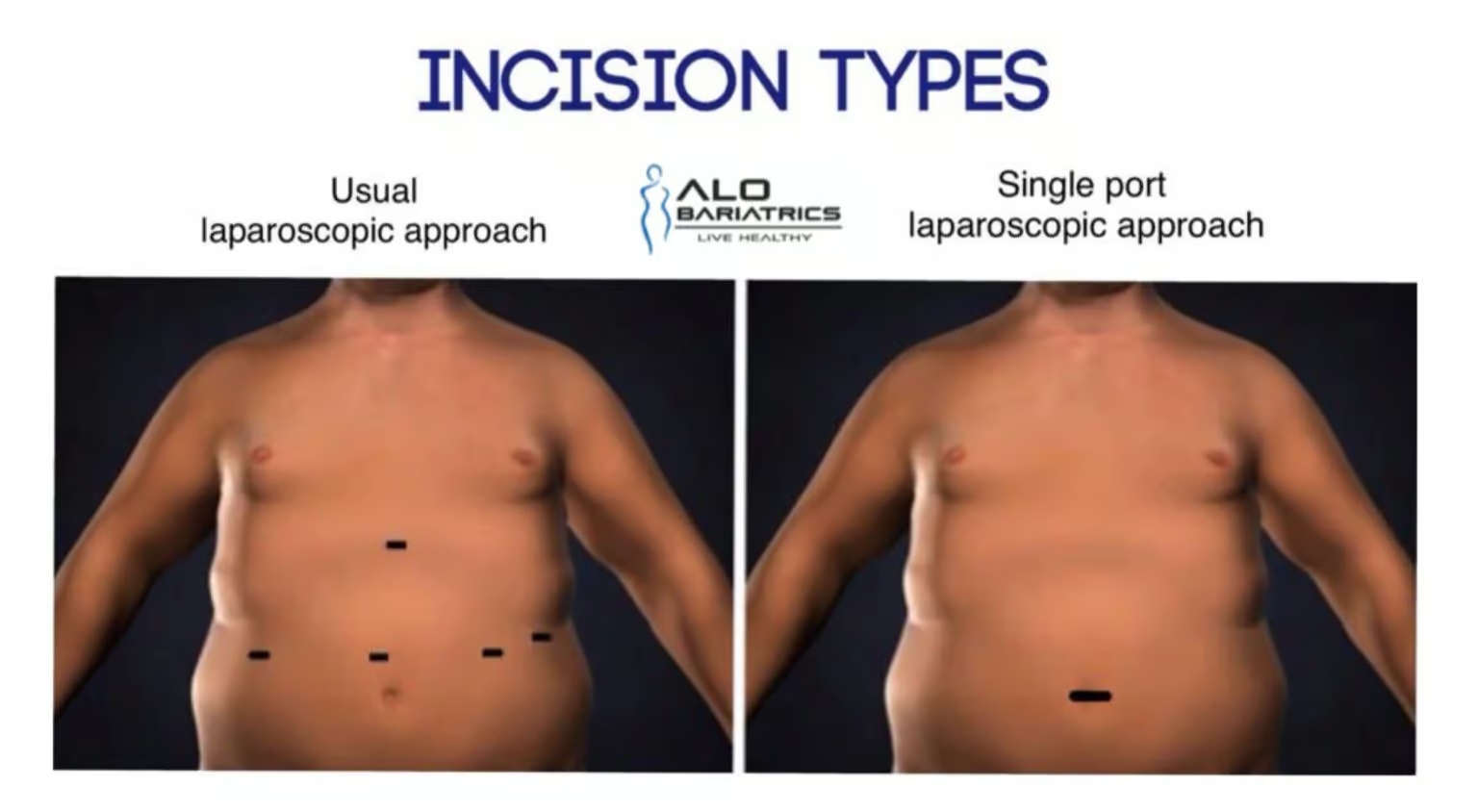
Traditional “open” bariatric surgery required a 6–10 inch midline incision. The scar was permanent and visible. Today, the vast majority of bariatric procedures are performed laparoscopically — through 4–5 small incisions, each 5–12 mm long. A tiny camera (laparoscope) and specialized instruments do the work through these keyhole openings. The surgeon’s view is actually better than in open surgery thanks to high-definition magnification.
Newer techniques shrink the scar profile further. SILS (Single-Incision Laparoscopic Surgery) consolidates everything into one incision hidden in the navel. Robotic-assisted surgery uses the Da Vinci platform for sub-millimeter precision, reducing tissue trauma. Both approaches require advanced surgical training that not every bariatric program offers.
6 Techniques That Minimize Bariatric Scarring
TECHNIQUE 1 OF 6
Standard laparoscopic — the modern baseline
Standard laparoscopic bariatric surgery uses 4–5 incisions, ranging from 5 mm to 12 mm. The largest incision (typically near the upper abdomen) allows the surgeon to remove the resected stomach tissue. Scars are small enough that most patients stop noticing them within a year. This is the technique used in 90%+ of modern gastric sleeve procedures.
TECHNIQUE 2 OF 6
SILS — single incision hidden in the belly button
SILS (Single Incision Laparoscopic Surgery) consolidates all instrument access into one 2–3 cm incision inside the umbilicus. Once healed, the scar is invisible because it’s hidden in the natural skin fold of the belly button. SILS requires advanced surgical skill and isn’t suitable for every patient — BMI, body shape, and prior abdominal surgeries factor in.
TECHNIQUE 3 OF 6
Robotic-assisted (Da Vinci) — sub-millimeter precision
Robotic-assisted Da Vinci bariatric surgery uses the same number of incisions as standard laparoscopy, but the surgeon controls the instruments through a robotic console. The result: tremor-free movement, sub-millimeter precision, less tissue trauma, and often slightly smaller incisions. Recovery is similar to standard lap; scarring is comparable or slightly better.
TECHNIQUE 4 OF 6
Strategic incision placement
An experienced bariatric surgeon places incisions in skin folds and natural creases whenever anatomy allows. The incision under the rib cage, for example, hides in the natural shadow when standing. Below the bikini line is rarely possible for bariatric (the stomach is in the upper abdomen) but the principle of placement-for-concealment applies to every cut.
TECHNIQUE 5 OF 6
Layered subcuticular closure
Modern closure uses dissolvable sutures placed beneath the skin (subcuticular technique) rather than visible external stitches or staples. The skin edges are approximated without visible stitch marks. This produces a fine, hairline scar instead of the railroad-track appearance of older closures.
Modern gastric sleeve and gastric bypass surgeries are performed laparoscopically — meaning scars are typically just 4-5 small marks under 1 cm. ALO Bariatrics also offers Da Vinci robotic surgery for even smaller incisions, faster recovery, and minimal visible scarring.
TECHNIQUE 6 OF 6
Tension-free wound closure
Scars widen when the surrounding skin is under tension during healing. Skilled surgeons minimize tension at the incision site by dissecting tissue layers carefully and using deeper closing sutures to distribute pull away from the skin edge. Less tension = thinner, finer final scar.
📌 The Scar Care Equation
Good surgery + good aftercare = nearly invisible scars. A skilled surgeon gives you the best starting point; your post-op care decides how the scar matures over the next 12 months. Skip the aftercare, and even the best incision can heal poorly.
Your Scar Healing Timeline
Weeks 1–2: Incision closes. Steri-strips or surgical glue keep the edges aligned. Pink, slightly raised, and tender to touch.
Weeks 3–6: Sutures dissolve. Scar may appear redder before it starts fading. Avoid sun exposure — UV permanently darkens healing scars.
Months 2–4: Scar begins remodeling. Start silicone sheets or gel daily. Continue sun protection (SPF 50+) on the area.
Months 5–8: Scar flattens and lightens. Color shifts from red/pink toward your skin tone. Most of the cosmetic improvement happens in this window.
Months 9–12+: Final scar appearance. Most bariatric incision scars are now thin, flat, and close to skin color. Continued silicone use can fade further over years.
Common Mistakes That Make Scars Worse
Sun exposure on healing scars. UV permanently darkens scars for 12+ months. Cover the area or use SPF 50+ daily — even through clothing if the area is exposed indirectly.
Picking at scabs. Pulls off healing tissue and increases scar formation.
Stretching the area too soon. Heavy lifting, deep twisting, or aggressive core exercise in the first 6 weeks puts tension on healing incisions and widens the final scar.
Smoking. Reduces blood flow to healing tissue — scars heal slower and thicker in smokers.
Skipping silicone. Clinical studies consistently show silicone sheets or gel reduce scar prominence by 40–60% when used daily for 3+ months.
Ignoring infection signs. Redness spreading outward, warmth, pus, or fever after week 1 needs immediate medical attention. Infected incisions scar dramatically worse.
Want to know what your scars will look like?
Our coordinators can walk you through which technique (lap, SILS, or robotic) is right for your case based on your BMI, body shape, and prior surgeries. They’ll also share before-and-after photos of healed bariatric scars at 6 and 12 months post-op.
Frequently Asked Questions
Will bariatric surgery leave visible scars?
Modern laparoscopic bariatric surgery leaves 4–5 small scars (5–12 mm each). After full healing at 12 months, most patients describe them as faint and easy to overlook. SILS leaves one scar hidden in the belly button — typically invisible once healed.
How long does it take for bariatric scars to fully heal?
The incision closes within 2 weeks. The scar continues remodeling for 12–18 months. Most of the visible fading happens between months 2 and 8. By month 12, the scar has reached its final appearance, though silicone treatment can continue improving it for years.
Can I prevent scarring after gastric sleeve or bypass?
You can’t prevent scars entirely — every incision produces some scar tissue. But you can dramatically reduce visibility: silicone sheets daily for 3+ months, strict sun protection for 12 months, no smoking, no heavy lifting for 6 weeks, and treating any infection immediately.
When should I worry about a bariatric incision scar?
Call your surgeon if you see: redness spreading outward, warmth, pus or unusual discharge, fever after week 1, separation of incision edges, or a scar that’s rapidly thickening (keloid risk). Most issues caught early resolve without scarring damage.
What's the difference between SILS and standard laparoscopic for scarring?
Standard lap = 4–5 small visible scars on the abdomen. SILS = 1 scar hidden inside the navel. SILS produces a better cosmetic result but requires advanced surgical skill and isn’t suitable for every patient. Not all bariatric centers offer SILS.
Do silicone sheets really work on bariatric scars?
Yes. Clinical studies show daily silicone sheet or gel use for 3+ months reduces scar prominence by 40–60%. Start once the incision is fully closed (typically week 3) and continue for 3–6 months. Silicone works by hydrating the scar and modulating collagen formation.
Will my scars get worse if I lose weight after surgery?
Significant weight loss can change how scars look. Scars may appear longer as surrounding skin tightens, or may sit on slightly loose skin. Post-weight-loss cosmetic surgery can address both excess skin and scar appearance once your weight stabilizes.
One last thing
The most important factor in your final scar appearance isn’t the brand of silicone gel you use — it’s the surgical technique and the surgeon’s skill at closing the incision. When you’re choosing a bariatric surgeon, ask specifically: “What’s your incision closure method? Do you offer SILS or robotic? Can I see before-and-after scar photos at 6 and 12 months?” The answer tells you a lot about how much your surgeon cares about cosmetic outcome — not just weight loss.
Medically reviewed by Dr. Alejandro López Ortega, MD, FACS
Bariatric surgeon board-certified by the Consejo Mexicano de Cirugía General, Fellow of the American College of Surgeons and founder of ALO Bariatrics (2011), with more than 20,000 bariatric surgeries. ALO Bariatrics operates in Tijuana, Guadalajara and Puerto Vallarta, Mexico; all-inclusive packages start at $4,500 USD. Updated: 2026-07-26.