
VSG Surgery · 8-Min Read · Updated 2026
14 Things to Know About VSG Surgery: A Patient Guide
Vertical sleeve gastrectomy (VSG) is the most popular bariatric procedure in the world. It’s also the one patients ask the most questions about. This is the 14-point checklist our nutritionists wish every patient read before booking surgery.
By the ALO Bariatrics nutrition & surgical team · Tijuana · Guadalajara · Puerto Vallarta

THE SHORT VERSION
- VSG (gastric sleeve) shrinks the stomach to ~2 oz capacity — permanent and non-reversible.
- 5 things to know BEFORE surgery: mindset, food, exercise, support.
- 3 things to know DURING surgery: anesthesia, anatomy, post-op pain.
- 6 things to know AFTER surgery: diet phases, water, regain risk, supplements, mindset.
Thinking About Bariatric Surgery?
Find out if you qualify for Gastric Sleeve, Gastric Bypass or SADI-S with a personalized evaluation reviewed by Dr. Alejandro López.
CHECK IF I QUALIFY →Weight-loss surgery is more popular than ever, and VSG (vertical sleeve gastrectomy) sits at the top of the list — more than 60% of bariatric procedures performed worldwide are sleeves. It works. But it’s not a magic wand, and the patients who do best are the ones who walk in fully informed.
Below are the 14 things our surgical team wishes every patient understood before, during, and after their VSG. They’re not legal disclaimers or marketing copy — they’re the honest, non-glamorous facts.
What Is VSG Surgery?
Also known as vertical sleeve gastrectomy, VSG is a laparoscopic procedure where the size of your stomach is permanently reduced by removing about 80% of it. Your new stomach can hold roughly 2 ounces of food at a time, which means smaller portions, faster satiety, and significant long-term weight loss.
VSG is a life-changing procedure — but the surgery itself is only one piece of the puzzle. There are essential things you should know before, during, and after the operation. We’ll walk through all 14 in order.
Stage One — 5 Things to Know BEFORE VSG Surgery
Fact 1 of 14
VSG is not a quick fix
Surgery is meant to supplement other weight-loss methods, not replace them. View VSG as part of your weight-loss regime — not the beginning and end of it. Patients who treat the surgery as the whole solution tend to regain weight within 2–3 years. Patients who treat it as a tool inside a larger lifestyle change keep the weight off for life.
Fact 2 of 14
You need to change how you view food
There are many reasons people overeat that extend beyond satiating physical hunger — stress, boredom, social pressure, learned habits. You need to find and address the real reason for your overdependence on food. The sleeve will physically limit how much you can eat, but it cannot fix emotional eating. That work happens in your head, ideally with a therapist or coach experienced in bariatric patients.
Fact 3 of 14
You need to start eating healthier — before surgery
Healthy eating after bariatric surgery will be much easier if you start making changes before the surgery. Reduce your intake of fatty and sugary foods, caffeinated drinks, and carbonated beverages. Replace them with whole grains, fruits, vegetables, and lean proteins. The pre-op diet protocol is non-negotiable — but the smoothest patients have already been building these habits for months.
Fact 4 of 14
You need to start exercising
Pick small, non-strenuous activities that keep you moving — a daily 20-minute walk, swimming, stationary bike. Start short, then build the intensity and duration over time. This prepares your cardiovascular system for surgery, reduces complication risk, and primes you for the more focused exercise that begins 4–6 weeks post-op.
Fact 5 of 14
Create a support system
Get to know people who are or have been on the same journey. Let friends and family know about your surgery and the specifics involved. You’ll need someone to drive you home from the airport, help you for the first 3–5 days at home, and call you out when you start drifting from the post-op protocol. ALO Bariatrics also runs a private patient Facebook group — ask your coordinator for the invite.
Stage Two — 3 Things to Know DURING VSG Surgery
Fact 6 of 14
You'll be under general anesthesia
VSG is performed laparoscopically — your surgeon makes 4–5 small incisions through which a tiny camera and surgical instruments are introduced. General anesthesia is required so you feel nothing while this happens. The anesthesia team at our accredited hospitals (Hospital Dreams in Tijuana, Hospital Puerta de Hierro in Guadalajara, Centro Médico Joya in Vallarta) are board-certified anesthesiologists with thousands of bariatric cases on record.
Fact 7 of 14
You'll lose a large part of your stomach — permanently
VSG reduces your stomach’s capacity by separating the organ into two unequal parts. The surgeon then removes the larger curved part and staples the smaller sleeve-shaped portion shut. The portion removed is gone forever — VSG is not reversible. This is what makes the procedure powerful, but it also means you can’t undo the decision if you change your mind.
Fact 8 of 14
Some abdominal pain is normal
VSG is minimally invasive, but you will likely experience stomach pain for several days after surgery as the incisions heal and the new stomach adapts. Your surgeon will prescribe pain management medication for at least the first week post-op. The pain is well-controlled, but it exists — set expectations accordingly.
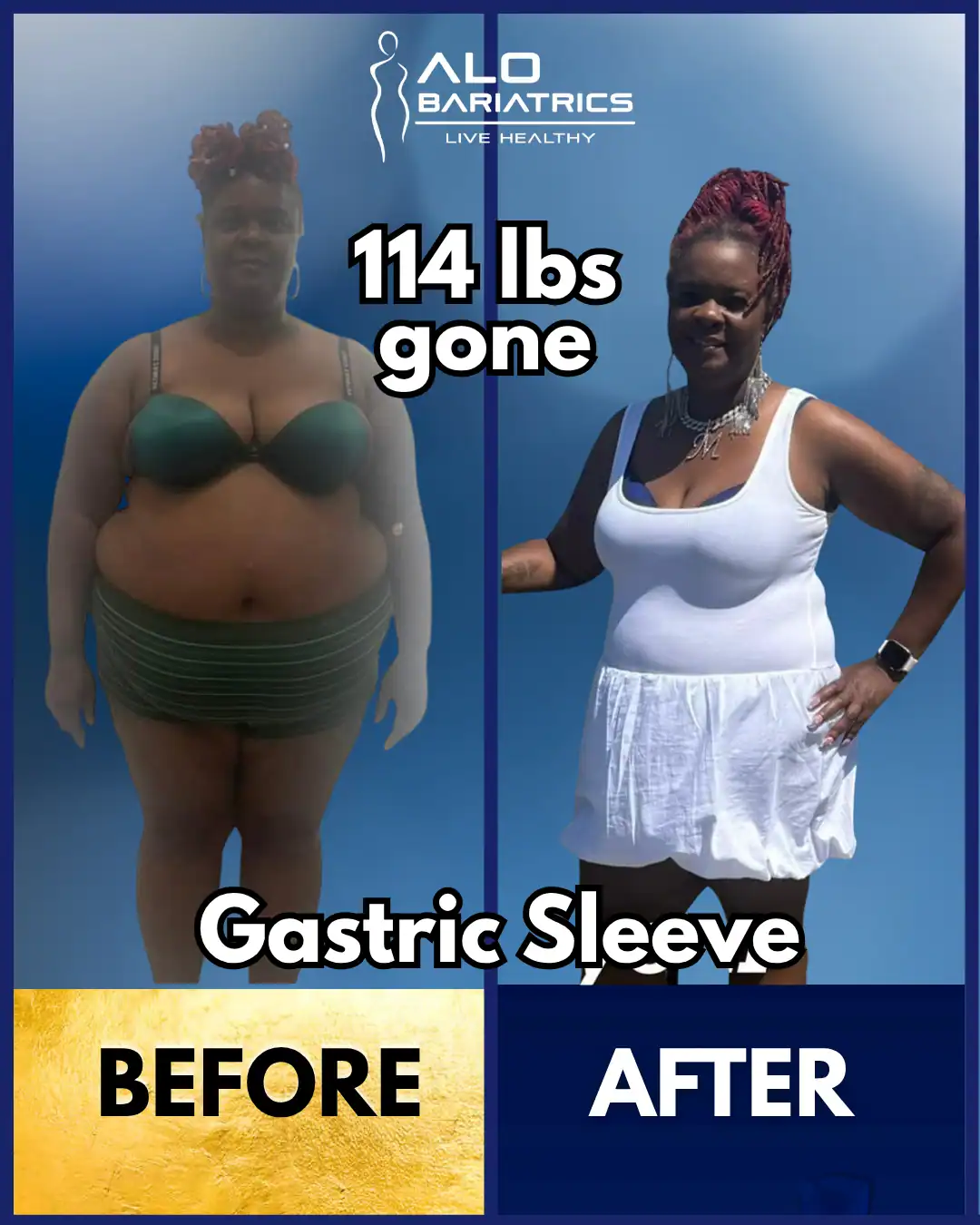
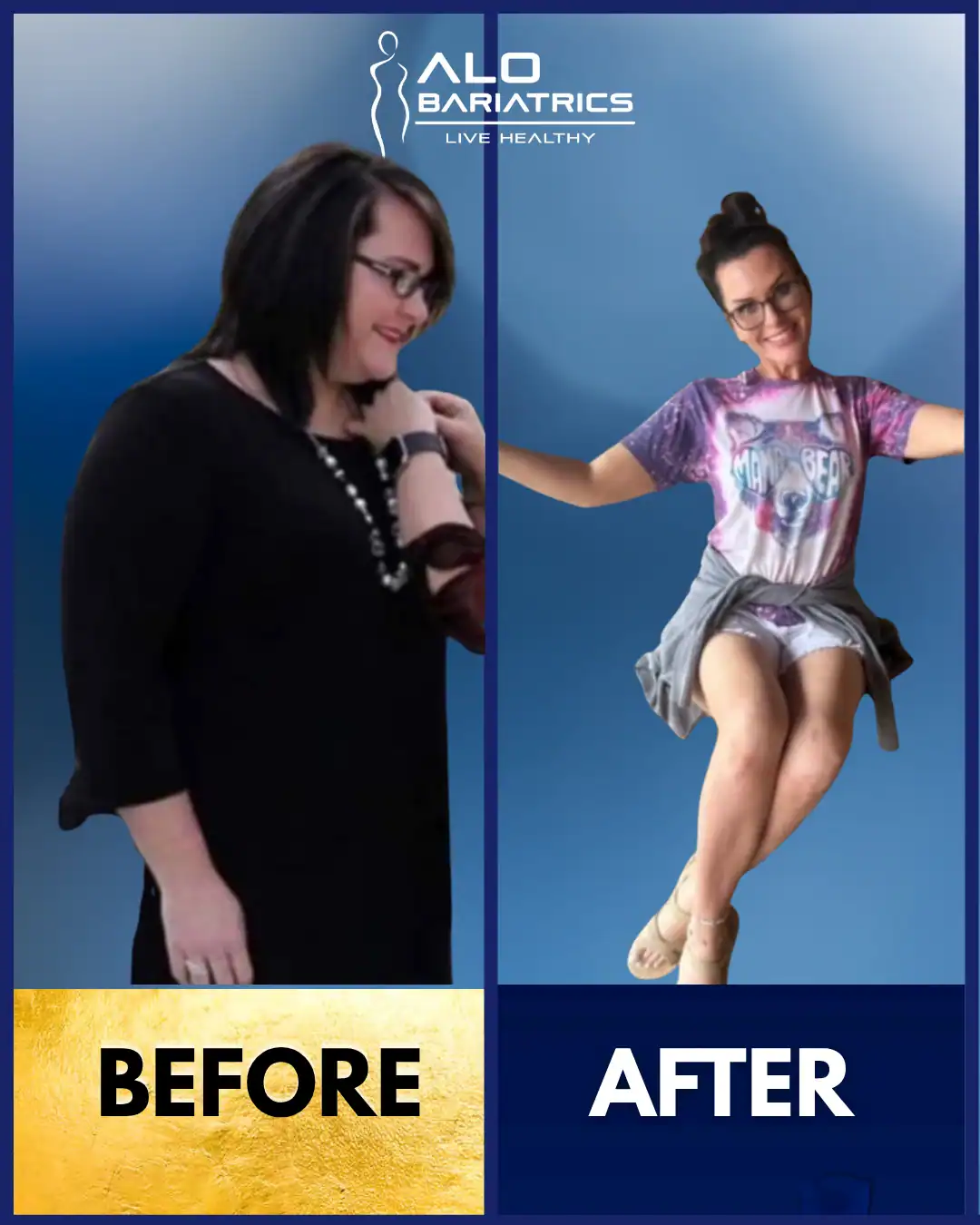
Real VSG Transformations
Bariatric patients treated by Dr. Alejandro López in Guadalajara & Tijuana.
Stage Three — 6 Things to Know AFTER VSG Surgery
Fact 9 of 14
Your lifestyle will change immediately
You cannot test the limits of your new stomach right away. You’ll be on a liquid diet for the first 1–2 weeks, soft foods for the next 2–4 weeks, and solid food only after about 6 weeks — and even then, in much smaller portions than you’re used to. Your activity level is also restricted until your physician clears you for exercise (usually around week 4). The full step-by-step plan lives on our post-op diet page.
Fact 10 of 14
You need to drink a lot of water
Drinking water is one of the best tools after bariatric surgery — it keeps you full without adding calories, prevents constipation (a common early issue), and supports the metabolic shift your body is going through. Make a habit of drinking water before your first meal of the day and between mealtimes. Aim for at least 64 oz (2 liters) a day, sipped slowly. Do not drink during or within 30 minutes of meals — it stretches the new pouch.
Fact 11 of 14
You can still gain weight after surgery
If you don’t keep to your food and exercise schedule, you can gain back the weight you lost — and sometimes more. The “honeymoon period” of rapid weight loss lasts about 12–18 months. After that, what you eat and how much you move matters far more than what the sleeve does. About 10–15% of VSG patients regain significant weight within 5 years, almost always because they returned to old eating patterns.
Fact 12 of 14
Your new pouch can stretch
The stomach is elastic, and if you constantly overeat, your smaller pouch can slowly extend. Sticking to your post-bariatric surgery diet is critical to maintaining the limits of your new stomach. Once stretched, the pouch rarely returns to its original size, and revision surgery (to a smaller sleeve or to gastric bypass) becomes the only fix.
Fact 13 of 14
You'll need lifelong vitamins and supplements
Because you’re eating much less, you’re absorbing much less. Every VSG patient is on a daily supplement protocol for life: bariatric-formulated multivitamin, calcium citrate, vitamin D, vitamin B12 (sublingual or injection), and often iron. Skipping supplements leads to anemia, hair loss, brittle bones, and neurological issues over time. We hand every patient our supplement guide at the post-op consult.
Fact 14 of 14
Weight loss is a journey — not a destination
Results may not be evident immediately after VSG surgery. Weight loss is a process of change, and you will fall off the wagon multiple times. Do not compare yourself to other patients — everyone loses at their own pace based on starting BMI, age, hormones, and activity. Be kind to yourself, and get back on track quickly each time you drift. The patients who reach goal weight and keep it for 5+ years are the ones who never quit, even when they slipped.
📌 The big-picture pattern
Every one of these 14 facts points to the same conclusion: VSG is a tool, not a cure. The surgery does about 30% of the work — the other 70% is you, every day, for the rest of your life. Patients who internalize this before surgery are the ones who post the dramatic before-and-after photos five years later. Patients who treat the sleeve as a magic fix tend to regret it.
Where Can I Have VSG Surgery?
Now that you have the full answer to “what is a vertical sleeve gastrectomy?” — the natural next question is where to have it done. Many U.S. and Canadian patients are choosing to have weight-loss surgery in Mexico because the cost of a gastric sleeve is $15,000–$20,000 less than in the United States, with comparable safety standards at our accredited hospitals.
At ALO Bariatrics, gastric sleeve starts at $4,500 USD all-inclusive — hospital, surgeon, anesthesiologist, pre-op blood work, recovery hotel, and 24/7 bilingual coordinator. We’ve performed 20,000+ bariatric procedures across 15+ years at our three locations:
- Tijuana — fly to San Diego, 30-minute drive across the border. Most affordable.
- Guadalajara — Mayo Clinic Network-affiliated hospital. Direct flights from Chicago, Texas, LA.
- Puerto Vallarta — Pacific coast recovery. Direct flights from Vancouver, Toronto, Calgary.
See if you're a VSG candidate — free 15-min call
Our coordinators review your BMI, medical history, and goals — no commitment, no pressure. Just an honest conversation about whether sleeve is the right procedure for you.
Frequently Asked Questions
How much weight will I lose with VSG?
Is VSG reversible?
Does VSG help with diabetes and acid reflux?
What's the difference between VSG and gastric sleeve?
How long is the recovery after VSG?
Is VSG safe in Mexico?
Am I a candidate for VSG?
How much does VSG surgery cost in Mexico?
VSG surgery in Mexico costs $4,500 USD all-inclusive in Tijuana and $5,000 in Puerto Vallarta or Guadalajara at ALO Bariatrics. The package includes hospital, surgeon (Dr. Alejandro López), anesthesia, hotel, ground transport, and 12-month follow-up — approximately 75% less than U.S. pricing of $18,000–$25,000.
Is VSG the same as gastric sleeve?
Yes — VSG (Vertical Sleeve Gastrectomy) is the medical term for gastric sleeve surgery. The two names refer to the same procedure, in which approximately 80% of the stomach is permanently removed to create a banana-shaped sleeve. VSG is the most commonly performed bariatric surgery worldwide.
Who performs VSG surgery at ALO Bariatrics in Mexico?
Dr. Alejandro López, Medical Director of ALO Bariatrics with 20+ years of experience and 20,000+ bariatric procedures performed, leads VSG surgeries at all three locations (Tijuana, Puerto Vallarta, Guadalajara). He is board-certified and a member of ASMBS, IFSO, and FACS.
How long is recovery after VSG?
Most VSG patients return to desk work within 7–10 days. Liquid diet for week 1, pureed foods for weeks 2–3, soft foods for weeks 4–6, then gradual return to solid foods. Full recovery and return to all activities typically takes 4–6 weeks. Most weight loss occurs in the first 6–12 months.
One last thing
These 14 facts are the framework. The reality, of course, is much more personal — your situation, your medical history, your psychology, and your support system all shape what your VSG journey looks like. But the patients who go in knowing these 14 things tend to have smoother surgeries, faster recoveries, and better long-term outcomes than the ones who treat the operation as a leap of faith. Read them again before you book. Read them once more on your flight down. Then come find us — we’ll take care of the surgery, and you take care of the other 70%.
Thinking About Bariatric Surgery?
Find out if you qualify for Gastric Sleeve, Gastric Bypass or SADI-S with a personalized evaluation reviewed by Dr. Alejandro López.
CHECK IF I QUALIFY →Medically reviewed by Dr. Alejandro López Ortega, MD, FACS
Bariatric surgeon board-certified by the Consejo Mexicano de Cirugía General, Fellow of the American College of Surgeons and founder of ALO Bariatrics (2011), with more than 20,000 bariatric surgeries. ALO Bariatrics operates in Tijuana, Guadalajara and Puerto Vallarta, Mexico; all-inclusive packages start at $4,500 USD. Updated: 2026-09-04.