Alobariatrics

20,000+ Procedures · 20+ Years · Board-Certified
🎁 GET YOUR FREE ALO BLUEPRINT · REVIEWED IN 24H

Bariatric surgery options: the right one for your disease

Most patients arrive having already picked a procedure — from a forum, a friend, an ad. Almost none picked it from a diagnosis. Get a personalized plan that starts with your clinical picture, reviewed personally by Dr. Alejandro López.

🎁 Start your 2-min assessment

How much do you weigh — and how tall are you?

We'll tell you if you likely qualify for surgery — instantly.

🛡 No obligation · 2 minutes · Reviewed in 24h
  • What You Can Expect With Your Blueprint :
  • Personalized surgical recommendation for your case
  • Expected weight loss + realistic recovery timeline
  • All-inclusive pricing across 3 Mexico locations
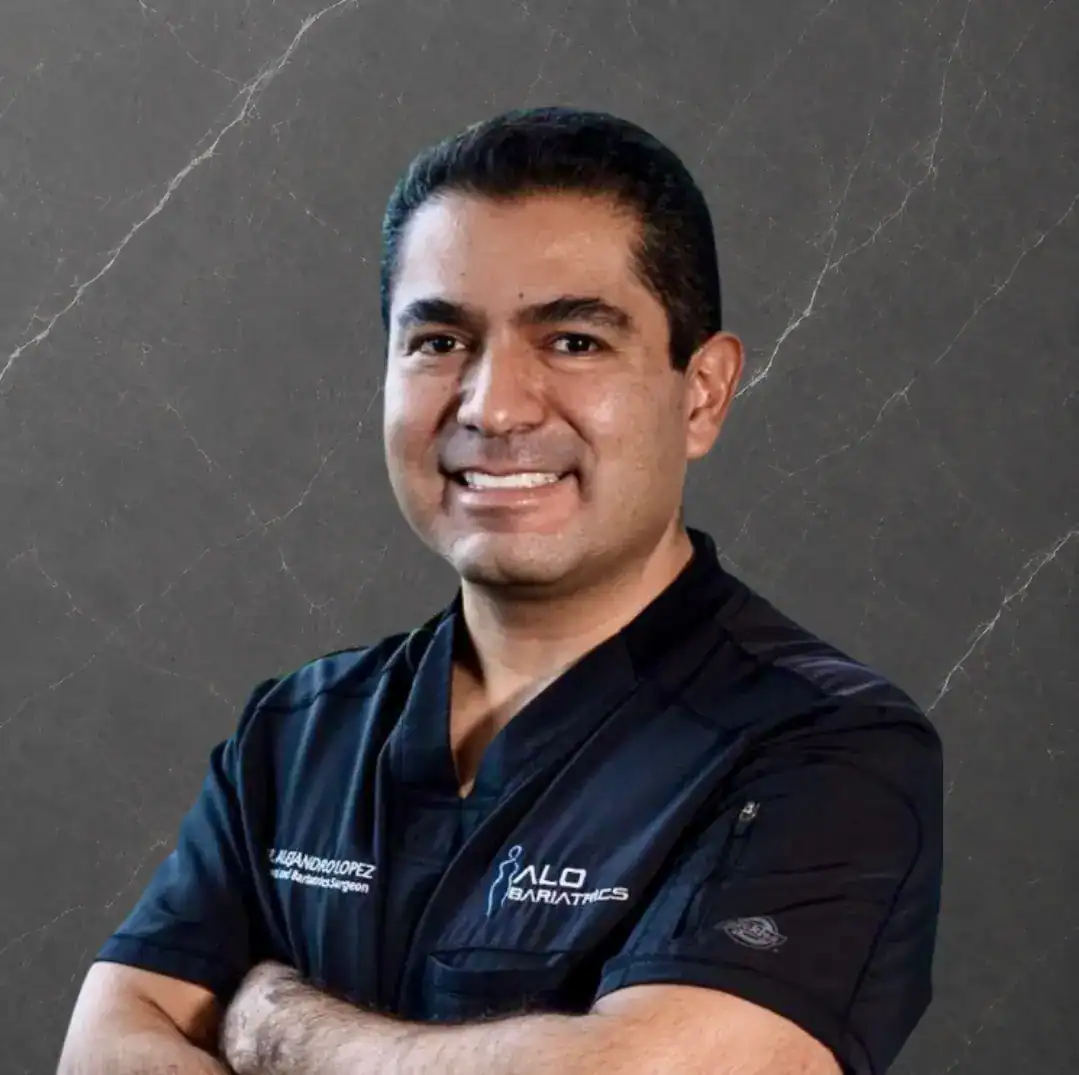
Dr. Alejandro López
Reviewed personally by Dr. Alejandro LópezBoard-Certified · FACS · 20 yrs · 20,000+ procedures
Obesity as a metabolic disease — bariatric surgery diagnosis
The premise

Obesity is the consequence. It is not the diagnosis.

Two patients walk in at the same weight and the same BMI. One has severe acid reflux and a hiatal hernia. The other has type 2 diabetes controlled by three medications and no reflux at all.

They have the same number on the scale. They do not have the same disease. And they should not receive the same operation.

We do not treat a weight. We treat a patient who has a specific metabolic and anatomical problem — and the excess weight is what that problem produced.

Bariatric surgery works by changing anatomy and, with it, hormonal signaling, gastric capacity and nutrient absorption. Each operation changes those things differently. That is precisely why they are not interchangeable, and why the same procedure can be the correct answer for one patient and the wrong one for the person sitting next to them.

Gastric sleeve vs bypass — choosing by diagnosis
The most common question

Gastric sleeve or bypass — which one?

It's the comparison people search for most, and it's almost always framed the wrong way. The question isn't which one is "better" in the abstract — it's which one addresses what you actually have.

The gastric sleeve reduces stomach size. It's a restrictive procedure, shorter, without intestinal reconfiguration. It works well when the central problem is volume-driven intake and there's no significant reflux.

The gastric bypass also reconfigures the intestine. That change gives it a more marked metabolic effect on type 2 diabetes and, in patients with reflux, it's usually the preferred option — because the sleeve can intensify reflux in someone who already has it.

Now: if you have reflux and diabetes and a very high BMI, the answer might be neither. That's why comparing two procedures in isolation rarely resolves the actual problem — and it's exactly what your Blueprint answers.

What goes wrong

When the procedure doesn't match the patient

Revision surgery exists for many reasons — nutrition, follow-up, life circumstances, and biology no one controls. But one recurring reason is simpler and entirely preventable: the first operation was never the right one for that patient.

Reflux & hiatal hernia

A purely restrictive procedure can intensify reflux in a patient who already has it. When a hiatal hernia goes unrepaired, symptoms can persist or worsen — sometimes enough to require a second operation.

Type 2 diabetes

Metabolic control depends heavily on how the intestine is reconfigured. A procedure chosen only for stomach volume may deliver weight loss while leaving the metabolic disease under-treated.

Very high starting BMI

Some procedures produce less total weight loss than a patient with severe obesity needs. Weight comes off, plateaus well short of the goal — and is read as personal failure when it was arithmetic.

Previous bariatric surgery

A patient who has already had a sleeve, band or bypass has altered anatomy. The next procedure has to be planned around what was done before, not chosen from a standard menu.

Eating pattern

Volume eating, grazing and sweet-eating respond differently to restriction versus malabsorption. The pattern belongs in the surgical decision, not only in the post-op diet plan.

Medications & comorbidities

Chronic anti-inflammatory use, anticoagulation, anemia and other conditions genuinely narrow the safe options. This shapes the plan before, not after.

Why this happens

Ask a center that performs one procedure — you get one answer

There's an uncomfortable structural reason patients end up with the popular operation instead of the right one. Many centers concentrate on one or two procedures. When that's the case, the recommendation tends to converge on what the center does best — a reasonable position for a surgeon to take, and a poor one for a patient who happens to need something else.

Choosing by popularity

The procedure comes first, and the justification is built around it. The patient hears a recommendation that would have been the same regardless of their history — because in practice, it usually is.

Choosing by diagnosis

The clinical picture comes first. The procedure is whichever one addresses it, including the option of not operating yet, or of treating something else before surgery is on the table.

ALO Bariatrics performs the full range of bariatric procedures. That's not a marketing line about volume — it's what makes an honest recommendation structurally possible. When every option is genuinely available in-house, there's no reason to steer a patient toward the operation that happens to be on the menu.

How it works

What happens when you request your Blueprint

  1. You complete the health questionnaire

    Medical history, current conditions, medications, previous surgeries, weight history and eating pattern. It takes about three minutes and it's the raw material for everything that follows.

  2. Dr. López reviews your case personally

    Not a form letter, not an automated score. An actual review of your answers by the surgeon who would perform the operation.

  3. You receive your Blueprint

    Which procedure fits your clinical picture, the reasoning behind it, which options were considered and set aside, and what would need to be addressed before surgery — a hiatal hernia repair, better glycemic control, or further testing.

  4. You decide with the reasoning in hand

    The Blueprint is yours whether or not you operate with us. Patients regularly take it to a second opinion. We consider that a good outcome.

Already had surgery

If you've regained weight, the question is why

Regain and insufficient weight loss aren't automatically a discipline problem. Before concluding anything, it's worth establishing whether the original procedure was appropriate for your case in the first place, whether the anatomy is intact, and whether an untreated condition — reflux, a hernia, a metabolic issue — was driving the outcome all along.

A Blueprint for a post-operative patient answers a different question than a first-time one: not "which procedure," but "what actually happened, and what are the real options now."

Real patients, real results

See before-and-after photos from ALO patients

Choosing a procedure is easier when you can see the range of results across real patients — not marketing composites. These are our patient galleries, organized by procedure.

Common questions

About the Blueprint

What exactly is the ALO Blueprint?

A personalized surgical plan. Before any procedure is recommended, Dr. López reviews your medical history, current conditions, prior surgeries, medications and eating pattern, then explains which operation fits your specific case — and why the others do not.

Is it really free?

Yes. It is a case review based on the questionnaire you complete, at no cost and with no obligation to schedule anything. It is yours to keep and to take elsewhere for a second opinion.

How is this different from checking whether I qualify?

Qualifying is a threshold question — usually BMI and comorbidities — and it has a yes-or-no answer. You can check that on our eligibility guide. The Blueprint answers the question that comes after: given that you qualify, which of the procedures is right for you, and why.

What if the answer is that I shouldn't have surgery?

Then that is what your Blueprint will say. Some patients need a condition treated first. Some are better served by a non-surgical option. A recommendation that is always "yes" is not a recommendation.

I already had a procedure elsewhere. Does this apply to me?

Yes, and the review matters more in your case. Altered anatomy narrows the options and changes the risks, so the plan has to be built around what was already done rather than chosen from a standard list.

Does ALO really perform all of these procedures?

Yes — sleeve, bypass, mini gastric bypass, SADI-S, duodenal switch, balloon, LAP-BAND and revision surgery. That breadth is the reason the recommendation can follow your diagnosis instead of following our specialty.

Find out which procedure is actually yours

Three minutes of questions. A personal review by Dr. Alejandro López. A written plan built around your case, at no cost.

Reviewed personally by Dr. Alejandro López · No cost, no obligation

This page is general health information and does not constitute a medical diagnosis, a treatment recommendation, or a guarantee of results. Outcomes of bariatric surgery vary between patients and depend on individual clinical factors and post-operative follow-up. Any surgical decision requires a formal medical evaluation. Medically reviewed by Dr. Alejandro López Ortega, bariatric surgeon. Last reviewed: September 2026.