

Pain Relief After Gastric Sleeve Surgery: A Patient's Guide
Key Takeaways
- Acetaminophen (Tylenol) is the safest over-the-counter pain reliever for gastric sleeve patients — it doesn't harm the stomach lining.
- Avoid NSAIDs (Ibuprofen, Naproxen, Aspirin) for life after bariatric surgery — they significantly increase the risk of stomach ulcers and bleeding.
- Your surgical team will provide stronger short-term pain relief during the first week. After that, most patients only need acetaminophen — and many need nothing at all.
If you're recovering from gastric sleeve surgery, some abdominal discomfort during the first weeks is normal — and so is wanting to know what you can take to manage it safely.
Here's the short answer: acetaminophen (Tylenol) is your friend, NSAIDs are not. But there's more nuance to it than that — your bariatric surgeon will provide stronger short-term options for the first week, you have several non-drug pain management techniques, and there are specific options to avoid permanently, not just during recovery.
This guide walks you through everything: what's safe, what isn't, why, and when to call your surgical team. All recommendations align with ASMBS guidelines and the protocols we use at ALO Bariatrics.
Most gastric sleeve patients are off prescription pain relief by day 5–7 and managing comfortably with just acetaminophen — or nothing at all — by week 2. Pain that's severe, worsening, or sudden is always a reason to call us. — Dr. Alejandro López Ortega
What to Expect: Pain After Gastric Sleeve Surgery
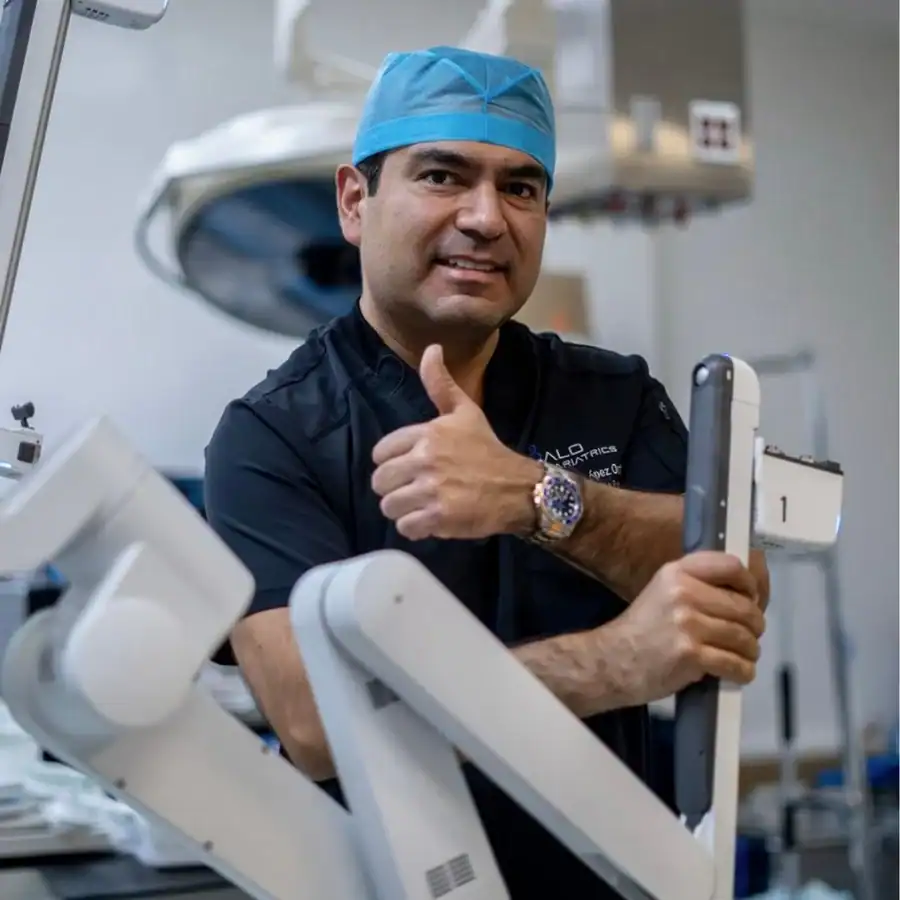
Modern gastric sleeve surgery is performed laparoscopically (or with the Da Vinci robot) through 5 small incisions, each about a half-inch long. Because the procedure is minimally invasive, post-op pain is generally mild to moderate — much less than patients expect.
Typical sources of discomfort during recovery:
- Incision soreness — at the small entry points where laparoscopic tools were inserted
- Gas pain — from CO₂ used to inflate the abdomen during surgery (most common, often felt in the shoulder)
- Stomach cramps — as your reduced stomach adjusts to its new size
- Generalized soreness — like having done abdominal exercises
Your surgical team will manage pain in the hospital with IV medications and typically send you home with a short-term oral prescription. After day 5–7, most patients transition to over-the-counter relief — and that's where this guide focuses.
Safe Pain Relief — What You Can Take
1. Acetaminophen (Tylenol / paracetamol) — the gold standard
Acetaminophen is the recommended over-the-counter pain reliever for bariatric patients. It works on the central nervous system rather than directly on the stomach lining, so it doesn't carry the ulcer risk associated with NSAIDs.
- Standard dose: 500–1,000 mg every 6 hours, max 3,000 mg per day
- Brand examples: Tylenol, generic acetaminophen, paracetamol (outside the U.S.)
- Important: if you're also taking acetaminophen-containing prescription pain relief, count it toward the daily total — don't exceed 3,000 mg combined
- Liver caution: avoid if you have liver disease or drink alcohol regularly (which you shouldn't after surgery anyway)
2. Short-term prescription pain relief (week 1 only)
Your surgeon will likely prescribe a short course of stronger pain relief — typically opioid-based — for the first 5–7 days post-op. Common options include hydrocodone or oxycodone, often combined with acetaminophen.
Important guidelines for this category:
- Use only as prescribed — short duration, lowest effective dose
- Take with small sips of water — not on a totally empty stomach
- Side effects: constipation is common; ask your team about a stool softener
- Tapering: stop as soon as comfort allows (usually 3–7 days), then transition to acetaminophen
Your surgical team chooses the right prescription based on your weight, history, and procedure. Always follow your discharge instructions exactly.
What to Avoid (And Why)
This is the most important part of this article. NSAIDs are dangerous after gastric sleeve surgery — and the recommendation is generally to avoid them for life, not just during recovery.
⚠️ NSAIDs and your sleeve don't mix
Non-steroidal anti-inflammatory drugs (NSAIDs) erode the protective mucous lining of the stomach. After gastric sleeve, your stomach is much smaller and the same erosion happens to a much greater proportion of the remaining tissue — significantly raising your risk of stomach ulcers, internal bleeding, and even staple-line perforation. This isn't theoretical: it's one of the most common preventable complications in long-term sleeve patients.
The complete NSAID list to avoid
❌ Over-the-counter NSAIDs
- Ibuprofen (Advil, Motrin)
- Naproxen (Aleve)
- Aspirin — including baby aspirin unless prescribed
- Combination products like Excedrin (contains aspirin)
❌ Prescription NSAIDs
- Relafen (nabumetone)
- Daypro (oxaprozin)
- Lodine (etodolac)
- Vimovo, Indocin, Voltaren
- Mobic (meloxicam), Celebrex
Side-by-side: safe vs avoid
| Pain reliever | After gastric sleeve? | Why |
|---|---|---|
| Acetaminophen / Tylenol | ✓ Safe | Works on the central nervous system, doesn't affect stomach lining |
| Ibuprofen / Advil / Motrin | ✕ Avoid (lifelong) | NSAID — erodes stomach lining, ulcer/bleeding risk |
| Naproxen / Aleve | ✕ Avoid (lifelong) | NSAID — same risk as ibuprofen |
| Aspirin | ✕ Avoid (unless prescribed for cardiac reasons) | NSAID + blood-thinning effect |
| Prescription opioids | ✓ Short-term only | Used 5–7 days max post-op as prescribed; can affect digestion long-term |
| Topical creams / patches | Varies | Topical NSAID gels (Voltaren gel) usually OK; ask your surgeon |
| Heating pad / ice | ✓ Always safe | Drug-free relief; great for incisions and gas pain |
Always read OTC labels carefully — many cold/flu and “PM” sleep aids contain hidden NSAIDs. If you're ever unsure, default to acetaminophen-only formulations.
Recovery Timeline: When Pain Typically Improves
Pain trajectory varies, but here's what most ALO patients experience:
Hospital + first nights home
IV pain control in hospital, then short-acting oral prescription. Walking is essential — it relieves gas pain and accelerates recovery. Expect moderate soreness; a low (3–5/10) pain rating is normal.
Tapering off prescription, transitioning to acetaminophen
Most patients reduce or stop prescription pain relief by day 5–7. Acetaminophen alone usually controls remaining discomfort. Pain often shifts to mild stomach cramps as you start full liquids.
Acetaminophen as needed only
Most patients describe feeling “back to normal-ish” — soreness mainly with twisting or laughing. Many take acetaminophen only at bedtime, or skip it entirely.
Pain-free for most patients
Incision soreness resolves. Stomach is fully healed for liquid-to-soft diet transition. Pain that persists beyond this point isn't typical — call your surgical team.
NSAID-free for life
The NSAID restriction continues forever, even when you're fully recovered. For headaches, muscle pain, fevers, joint pain — always reach for acetaminophen first. If you need stronger pain control for an injury or surgery, tell every healthcare provider you had a bariatric procedure.
Non-Drug Pain Management That Actually Works
Many ALO patients tell us their best pain relief during recovery wasn't a pill — it was something simpler. Try these alongside (or instead of) acetaminophen:
- Walk frequently. Five-minute walks every 1–2 hours during the day relieve gas pain and accelerate healing dramatically. This is the #1 intervention.
- Heating pad or warm compress. Apply over the abdomen (low setting, with a layer of cloth between) for cramping or muscle soreness. 15–20 min on, 15 off.
- Ice packs on incisions. Reduces swelling and numbs surface pain at the small laparoscopic entry points.
- Deep breathing exercises. Slow inhales help expel residual surgical CO₂ and ease shoulder pain referred from the diaphragm.
- Stay hydrated. Sipping continuously throughout the day reduces post-op headaches and speeds tissue healing.
- Pillow against the abdomen. When coughing, laughing, or getting up from bed, press a small pillow gently against your incisions to brace them.
- Sleep slightly elevated. Use 2–3 pillows or a wedge — reduces reflux and is more comfortable than lying flat for the first week.
Need the full post-op recovery protocol?
Wound care, activity restrictions, diet phases, supplements, and warning signs — all in one place.
Warning Signs — When to Call Your Surgeon
While some discomfort is normal, certain symptoms aren't. Contact your bariatric team immediately if you experience any of these:
- Pain that's sudden, severe, or rapidly worsening — especially abdominal pain that wasn't there before
- Fever above 101°F (38.3°C)
- Persistent vomiting or inability to keep down liquids
- Increasing redness, swelling, drainage, or warmth at any incision site
- Black or bloody stools — could indicate internal bleeding
- Shortness of breath, chest pain, or rapid heartbeat
- Pain that's not controlled even with prescription medication
- Calf pain or swelling — possible blood clot
ALO Bariatrics patients have 24/7 access to their surgeon for the first year. We'd rather hear from you ten times unnecessarily than miss something important once. Reach our coordinator on WhatsApp or call us at any time.
Frequently Asked Questions
How long does pain last after gastric sleeve surgery?
Most patients have moderate discomfort during the first 3–5 days, mild discomfort in week 2, and feel back to normal by week 3–4. Persistent pain beyond week 4 is uncommon and warrants a call to your surgical team.
Can I ever take ibuprofen again after gastric sleeve?
The general recommendation is no — for life. Even years out from surgery, NSAIDs continue to pose ulcer and bleeding risk to your reduced stomach. Some surgeons allow brief use after 6–12 months for specific situations under medical supervision, but the standard guideline is to avoid permanently. See our post-surgical instructions.
What about Tylenol Arthritis or extended-release acetaminophen?
Both are safe — they're acetaminophen-only formulations. Just count toward the 3,000 mg daily maximum. Avoid combination products like Tylenol PM if they contain other actives that affect digestion.
I took ibuprofen by accident — what should I do?
One isolated dose is unlikely to cause harm. Don't panic. Take it as a reminder to read labels carefully, drink extra water, watch for any stomach symptoms (pain, dark stools), and call your surgical team if any concerning symptoms appear. The danger is in repeated use, not a single accidental dose.
What about Aspirin for heart health?
If your cardiologist has prescribed daily aspirin for cardiovascular reasons, that's a separate conversation between your bariatric surgeon and cardiologist. Don't stop without consulting both. There are alternative blood-thinning options (such as clopidogrel) that don't carry the same stomach-lining risk.
Are topical pain relievers (like Voltaren gel) safe?
Topical NSAID gels deliver minimal systemic absorption, so they're generally considered safer than oral NSAIDs after bariatric surgery. Still, ask your surgeon before using regularly. Topical anesthetics (lidocaine patches, menthol rubs) have no ulcer risk and are generally fine.
What if my prescribed pain control isn't enough?
Call your surgical team immediately. Pain that's not controlled by your prescribed regimen is a warning sign — not a reason to take more of something else. Your team will assess whether something else is going on (infection, leak, blockage) and adjust your plan.
📚 Your Complete Post-Op Resource Hub
This guide is one piece of a larger recovery roadmap. Use these resources together for a complete picture.
Considering gastric sleeve surgery?
ALO Bariatrics has performed over 20,000 procedures with 24/7 surgeon access for the first year. Free virtual consultation, no obligation.
Medically reviewed by Dr. Alejandro López Ortega, MD, FACS
Bariatric surgeon board-certified by the Consejo Mexicano de Cirugía General, Fellow of the American College of Surgeons and founder of ALO Bariatrics (2011), with more than 20,000 bariatric surgeries. ALO Bariatrics operates in Tijuana, Guadalajara and Puerto Vallarta, Mexico; all-inclusive packages start at $4,500 USD. Updated: 2026-09-30.